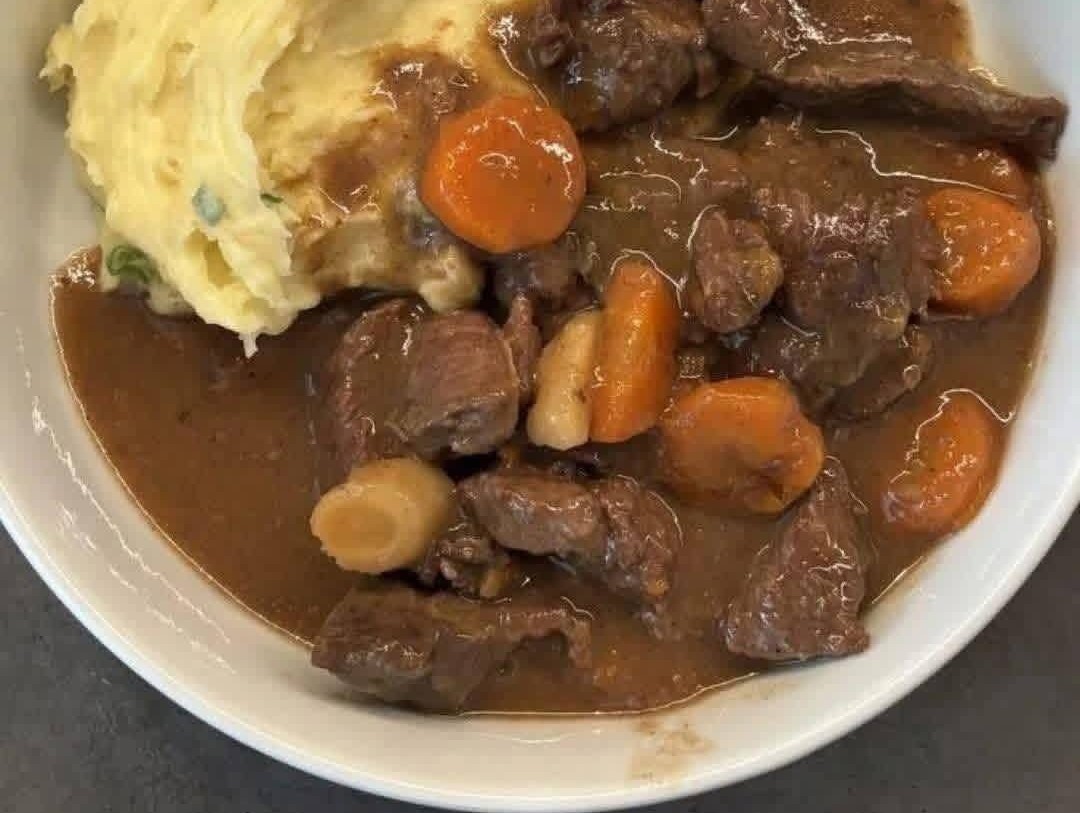
Few homemade meals can match the comfort and satisfaction of a hearty slow-cooked beef stew with creamy mashed potatoes. This timeless dish combines tender chunks of beef, wholesome vegetables, and a rich, flavorful gravy that develops slowly over several hours of gentle cooking. Paired with smooth mashed potatoes enriched with cream cheese, butter, and heavy cream, every bite delivers warmth and incredible flavor. Whether you’re preparing dinner for your family, hosting guests on a chilly evening, or simply craving a filling homemade meal, this recipe offers everything you expect from classic comfort food. The long cooking process allows every ingredient to absorb the savory broth, resulting in a delicious dish that feels both rustic and elegant. Best of all, the recipe uses simple pantry ingredients and traditional cooking methods that make it approachable for cooks of every skill level.
Why Slow Cooking Creates the Best Beef Stew
One of the greatest advantages of slow cooking is the way it transforms affordable cuts of beef into incredibly tender pieces that almost fall apart with a fork. Cuts such as chuck roast contain connective tissue that gradually melts during long, gentle cooking, producing meat that is juicy, flavorful, and exceptionally soft. At the same time, the cooking liquid absorbs all the natural juices from the beef, creating a rich gravy that cannot be achieved through quick cooking methods. Every ingredient has time to release its own flavor, allowing the onions, garlic, tomato paste, broth, and seasonings to blend together naturally. This slow development of flavor gives homemade beef stew its signature depth and makes every spoonful rich, satisfying, and comforting.
The Importance of Browning the Beef Before Simmering
Although it may seem like an extra step, browning the beef is one of the most important parts of preparing a flavorful stew. Cooking the beef over medium-high heat allows the surface to develop a rich brown crust through caramelization, adding layers of savory flavor that cannot be achieved by simply boiling the meat. The browned bits that remain on the bottom of the pot become equally valuable because they dissolve into the sauce once the liquid is added. These concentrated flavors enrich the broth and create the hearty taste that makes homemade beef stew so memorable. Browning the beef in batches also prevents overcrowding the pot, ensuring each piece develops an even golden crust instead of steaming.
Building a Rich and Flavorful Stew Base
Once the beef has been browned and removed from the pot, the remaining ingredients begin building the stew’s rich foundation. Soft diced onions provide natural sweetness while minced garlic adds a warm, aromatic flavor that complements the beef beautifully. Tomato paste contributes a concentrated richness while also deepening the color of the gravy. As these ingredients cook together, they create an intensely flavorful base that supports every other ingredient added later. Pouring in the red wine helps loosen the browned bits from the bottom of the pot while adding another layer of complexity. As the wine reduces, its bold flavor mellows into the sauce, leaving behind subtle richness that enhances the overall stew without overpowering it.
Simple Vegetables That Bring Balance and Nutrition
A classic beef stew is more than just tender meat. The vegetables play an equally important role by adding texture, color, sweetness, and nutritional value. Carrots naturally become sweeter during slow cooking, balancing the savory richness of the beef and gravy. Turnips contribute a gentle earthy flavor that blends perfectly with the broth while maintaining their texture throughout the long cooking process. These vegetables absorb the surrounding flavors as they simmer, becoming tender without losing their shape. If desired, additional vegetables such as peas or green beans can be added near the end of cooking to provide extra freshness and color. Together, the vegetables create a balanced meal that is both satisfying and nutritious.
The Secret to Smooth and Creamy Mashed Potatoes
No beef stew feels complete without a generous serving of creamy mashed potatoes. Russet potatoes are especially well suited for this recipe because their naturally starchy texture produces light, fluffy mashed potatoes. After boiling until fork tender, the potatoes are drained thoroughly before being mashed with softened cream cheese, butter, and heavy cream. This combination creates an exceptionally smooth consistency while adding rich dairy flavor that complements the savory stew. Cream cheese provides slight tanginess and extra creaminess, while butter enhances the luxurious texture. Heavy cream brings everything together into a soft, velvety mash that pairs beautifully with the rich beef gravy poured over the top.
A Meal Perfect for Family Dinners and Special Gatherings
One reason this slow-cooked beef stew remains a favorite across generations is its versatility. It is equally suitable for casual weeknight dinners, holiday gatherings, Sunday family meals, or entertaining guests. Since the stew cooks slowly with minimal attention, much of the work is completed well before serving time. The comforting aroma that fills the kitchen during cooking creates anticipation and makes the meal feel even more inviting. Large batches also make it ideal for feeding several people while leaving enough leftovers for another meal. Because the flavors continue developing during refrigeration, many cooks believe the stew tastes even better the following day, making it an excellent option for meal preparation.
Nutritious Ingredients That Create a Complete Homemade Meal
This rustic beef stew offers far more than outstanding flavor. Beef provides high-quality protein along with important nutrients such as iron, zinc, and vitamin B12 that support energy production and overall health. Carrots contribute vitamin A and antioxidants, while turnips provide fiber and essential minerals. The potatoes add satisfying carbohydrates for lasting energy, and the dairy ingredients contribute calcium and protein. Unlike many processed convenience meals, this homemade recipe allows complete control over every ingredient, making it easier to adjust seasoning and portion sizes according to personal preference. The result is a wholesome meal that combines excellent nutrition with comforting homemade flavor.
Why This Recipe Becomes Even Better the Next Day
One of the remarkable qualities of slow-cooked beef stew is how beautifully it stores after cooking. As the stew cools and rests overnight in the refrigerator, the ingredients continue exchanging flavors, creating an even richer and more balanced taste. The gravy thickens naturally while the vegetables absorb more of the savory broth. Reheating the stew the following day produces a meal that many people consider even more delicious than when freshly prepared. This quality makes the recipe ideal for busy households, allowing dinner to be prepared in advance while still delivering exceptional flavor and texture whenever it is served.
Cooking the Stew Slowly for Maximum Flavor
After the flavorful base has been prepared, the browned beef is returned to the pot along with beef broth, Worcestershire sauce, sugar, and seasonings. At this point, patience becomes one of the most important ingredients. A gentle simmer allows the beef to slowly become tender while giving the broth enough time to develop into a rich gravy. Cooking over low heat prevents the meat from becoming tough and helps preserve moisture inside every piece. During this process, the flavors continue to blend naturally, creating a balanced sauce that coats the beef beautifully. Occasionally checking the liquid level and giving the stew a gentle stir ensures everything cooks evenly while preventing ingredients from sticking to the bottom of the pot.
Adding Vegetables at the Right Time
Timing is essential when adding vegetables to a slow-cooked stew. Since carrots and turnips require less cooking time than beef, adding them later helps maintain their texture and natural sweetness. Turnips are added first because they take slightly longer to soften, while carrots follow later so they remain tender without becoming overly soft. This careful timing allows each vegetable to retain its shape while absorbing the delicious broth surrounding it. If additional vegetables such as peas or green beans are desired, they can be stirred in during the final few minutes of cooking. This method preserves their bright color and fresh flavor while keeping the stew visually appealing and nutritionally balanced.
Preparing Creamy Cream Cheese Mashed Potatoes
While the stew finishes cooking, attention turns to preparing the creamy mashed potatoes that complete this comforting meal. Peeled russet potatoes are placed into cold salted water before being brought to a gentle boil. Starting with cold water allows the potatoes to cook evenly from the center outward, resulting in a smoother mash. Once fork tender, they are drained thoroughly and allowed to release excess steam before mashing. This simple step prevents watery mashed potatoes and helps create a light, fluffy texture. Cream cheese, butter, heavy cream, and optional Montreal steak seasoning are then blended into the warm potatoes, creating a rich, silky consistency that pairs perfectly with the hearty beef stew.
Creating the Perfect Serving Presentation
Presentation plays an important role in making homemade comfort food even more inviting. A generous scoop of creamy mashed potatoes forms the foundation of each serving, while the rich beef stew is spooned alongside or directly over the potatoes. Extra gravy is poured over the top so every bite contains both the tender beef and smooth mashed potatoes. Fresh chopped parsley may be sprinkled over the finished dish to add color and freshness without changing the recipe’s classic flavor. Served with crusty bread for those not following a low-carb diet or simply enjoyed on its own, this hearty meal delivers warmth and satisfaction from the first bite to the last.
Easy Variations to Suit Your Taste
Although this recipe already offers wonderful flavor, it can easily be adapted to suit different preferences. Mushrooms make an excellent addition for extra earthiness, while celery provides another layer of savory flavor. Some cooks enjoy adding fresh herbs such as thyme or rosemary during the simmering process to introduce aromatic notes that complement the beef beautifully. If red wine is unavailable or preferred without alcohol, additional beef broth may be substituted while still producing a delicious stew. For those who enjoy slightly thicker gravy, allowing the stew to simmer uncovered during the final few minutes naturally reduces the liquid without requiring additional thickeners. These simple variations allow every cook to personalize the recipe while preserving its comforting character.
Storage and Make-Ahead Convenience
One of the greatest advantages of homemade beef stew is how well it stores after cooking. Once cooled completely, leftovers should be transferred to airtight containers and refrigerated. The stew remains fresh for several days, making it ideal for meal planning or preparing dinner ahead of time. It also freezes exceptionally well for longer storage. When reheating, gentle warming over medium-low heat helps preserve the tenderness of the beef while maintaining the smooth consistency of the gravy. If the stew thickens too much during storage, simply add a small amount of beef broth or water until the desired consistency is reached. Freshly prepared mashed potatoes can also be refrigerated separately and reheated with a splash of cream if needed.
Helpful Notes for Consistently Great Results
Small cooking techniques often make the biggest difference in the final dish. Always brown the beef in batches to encourage proper caramelization rather than steaming. Scraping the bottom of the pot after adding the wine ensures every flavorful browned bit becomes part of the gravy. Avoid boiling the stew rapidly, as gentle simmering produces much more tender meat. Taste the stew before serving and adjust the seasoning if necessary because broth brands vary in salt content. Warming the cream cheese slightly before mixing it into the potatoes helps create a smoother texture with less effort. Finally, allowing the stew to rest for several minutes before serving helps the flavors settle and makes the gravy even richer.
Frequently Asked Questions
Many home cooks preparing beef stew for the first time have similar questions. One common question concerns the best cut of beef. Chuck roast is generally considered the best choice because its connective tissue becomes wonderfully tender during long cooking. Another frequent question is whether the stew can be prepared without wine. Absolutely. Simply replace the wine with additional beef broth for equally satisfying results. Some people also ask if this recipe can be made in a slow cooker. Yes. After browning the beef and preparing the flavor base, all ingredients can be transferred to a slow cooker and cooked on low until the meat becomes tender. The mashed potatoes should still be prepared separately for the best texture.
Why This Recipe Deserves a Place in Your Meal Rotation
Every family benefits from reliable recipes that combine simple ingredients with outstanding flavor, and this rustic slow-cooked beef stew certainly belongs in that category. It offers everything people appreciate in traditional comfort food: tender beef, flavorful vegetables, rich homemade gravy, and smooth mashed potatoes. The preparation is straightforward, the ingredients are widely available, and the finished meal is suitable for both everyday dinners and special occasions. Since leftovers taste even better after resting overnight, this recipe also saves time during busy weeks while providing delicious homemade meals with minimal additional effort.
Rustic Slow-Cooked Beef Stew with Creamy Cream Cheese Mashed Potatoes
Enjoy the ultimate comfort food with this Rustic Slow-Cooked Beef Stew with Creamy Cream Cheese Mashed Potatoes. Tender chunks of beef are slowly simmered with onions, garlic, carrots, turnips, tomato paste, and a rich beef broth until they become melt-in-your-mouth soft. Served over fluffy mashed potatoes blended with cream cheese, butter, and heavy cream, this hearty homemade meal is perfect for family dinners, cozy weekends, and cold-weather comfort. The slow cooking process develops deep, savory flavors that make every bite rich, satisfying, and unforgettable.
6
servings30
minutes3
hours720
kcalIngredients
- For the Slow-Cooked Beef Stew
3 tablespoons olive oil
1 tablespoon butter
2 pounds beef stew meat (chuck roast pieces)
Salt and freshly ground black pepper, to taste
1 finely diced onion
3 garlic cloves, minced
3 tablespoons tomato paste (or one small can)
½ cup red wine
4 cups beef broth
2 tablespoons Worcestershire sauce
½ teaspoon sugar
4–5 carrots, peeled and diced
1 small turnip, peeled and diced
- For the Cream Cheese Mashed Potatoes
5 pounds russet potatoes, peeled and quartered
8 ounces softened cream cheese
½ cup butter
½ cup heavy cream
1 teaspoon Montreal steak seasoning (optional)
Salt and freshly ground black pepper, to taste
Directions
- Step 1: Season and Brown the Beef
Season the beef stew meat generously with salt and black pepper. Heat the olive oil in a large heavy-bottomed pot over medium-high heat. Add the butter and allow it to melt completely. Working in batches, brown the beef on all sides until a deep golden crust forms. Avoid overcrowding the pot, as this helps achieve better caramelization. Transfer the browned beef to a plate and repeat with the remaining meat. - Step 2: Prepare the Flavor Base
Reduce the heat to medium-low. Add the diced onion to the same pot and cook until soft and translucent. Stir in the minced garlic and tomato paste, cooking for about 3–4 minutes while stirring frequently. Pour in the red wine and scrape the bottom of the pot to loosen all the flavorful browned bits. Continue simmering until most of the wine has reduced. - Step 3: Simmer the Stew
Pour the beef broth into the pot and stir in the Worcestershire sauce, sugar, and half a teaspoon of salt. Return the browned beef and any collected juices to the pot. Bring everything to a gentle boil, then reduce the heat to low. Cover the pot with a lid and simmer gently for 1½ to 2 hours, allowing the beef to become tender. - Step 4: Cook the Vegetables
Add the diced turnip to the stew and continue cooking for approximately 15 minutes. Stir in the diced carrots and cook for another 30 minutes, or until all the vegetables are tender. If preferred, add peas or green beans during the final few minutes of cooking. If the gravy becomes thicker than desired, stir in a little additional beef broth or water. Taste the stew and adjust the seasoning with more salt and pepper if necessary. - Step 5: Prepare the Creamy Mashed Potatoes
Place the peeled and quartered russet potatoes into a large saucepan and cover with cold salted water. Bring to a boil and cook until the potatoes are completely fork-tender. Drain thoroughly and allow the potatoes to release excess steam for a minute or two. Add the softened cream cheese, butter, heavy cream, and optional Montreal steak seasoning. Mash until the potatoes become smooth, creamy, and fluffy. Season with salt and black pepper according to taste. - Step 6: Assemble and Serve
Spoon a generous portion of creamy mashed potatoes onto each serving plate or into individual bowls. Top with the slow-cooked beef stew and plenty of rich gravy. Garnish with freshly chopped parsley if desired and serve immediately while hot.
Nutrition Facts
6 servings per container
- Amount Per ServingCalories720
- % Daily Value *
- Total Fat
46g
59%
- Total Carbohydrate
32g
12%
- Protein 42g 84%
* The % Daily Value tells you how much a nutrient in a serving of food contributes to a daily diet. 2,000 calories a day is used for general nutrition advice.
Details
6
30
180
720


