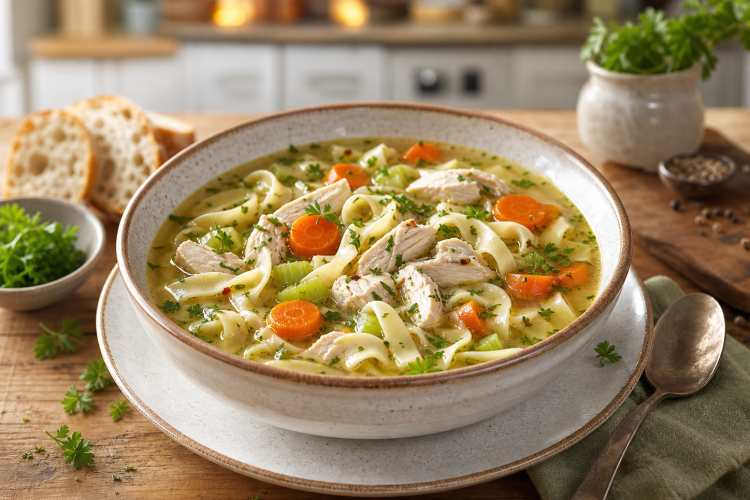
Homemade chicken noodle soup is classic comfort food made fast on the stovetop. This easy version uses rich chicken stock, tender carrots and celery, and egg noodles that cook right in the pot. Adding rotisserie chicken at the end keeps the meat juicy. The result is a cozy, weeknight soup ready in 40 minutes.
Why Make It From Scratch
Soup from scratch tastes fresher, cleaner, and more savory than canned versions. You control salt, herbs, and noodle doneness, so nothing turns mushy. Using real stock adds body you can’t fake with water. It’s simple cooking that rewards you with deep flavor in a short time.
Ingredients
Best Stock Or Broth To Use
For the richest taste, reach for homemade chicken stock. It gives silkiness and depth without extra salt. Store‑bought chicken broth also works well; simply balance it with a little chicken base if it tastes thin. Either option delivers a warming bowl with real chicken flavor.
Vegetables Build Sweetness
Celery and carrots sautéed in butter bring gentle sweetness that rounds out the stock. A quick three‑minute sauté softens edges but keeps the vegetables bright. This step boosts aroma without turning the soup greasy. Garlic joins briefly to perfume the pot.
Balanced Seasoning Profile
Dried rosemary and thyme add classic soup flavor with minimal effort. A pinch of crushed red pepper wakes up the broth without making it spicy. Kosher salt and black pepper finish the balance. Taste the broth as you go so your seasoning stays spot on.
Chicken Choices That Shine
Rotisserie chicken makes this an easy chicken soup with built‑in richness. White and dark meat both work; shred or dice into bite‑size pieces. If you prefer raw chicken, simmer it in the broth first, then add noodles. Either way, add the meat late to keep it tender.
Noodles That Stay Tender
Homemade egg noodles are a great fit because they keep their bite. Dry egg noodles, farfalle, or similar short pasta also work. Always cook to just‑al‑dente. Remember, noodles continue softening after the heat is off, so stop early for perfect texture.
Butter Adds Roundness
A small amount of butter at the start helps vegetables release flavor and gives a satisfying mouthfeel. Because it’s a small dose, the soup stays light. The butter also helps herbs cling to the vegetables before the stock goes in, building a flavorful base.
How To Make
Step 1 Sauté The Veg
Melt butter in a large stockpot over medium‑high heat. Add diced celery and carrots and cook about three minutes, stirring occasionally. Add minced garlic and cook another 30 seconds. This quick sauté sweetens the vegetables and blooms the aromatics without browning.
Step 2 Season The Broth
Pour in chicken stock or broth and bring it toward a boil. Stir in dried rosemary, thyme, crushed red pepper, salt, and black pepper. Taste the liquid now. If it seems flat, add a measured spoonful of chicken bouillon or base to deepen the flavor.
Step 3 Cook Noodles Al Dente
Raise heat and bring the pot to a gentle boil. Add your noodles and cook until just al dente. If using store‑bought pasta, watch closely and pull the pot off heat as soon as they’re barely tender. Residual heat will finish them to the perfect bite.
Step 4 Add Shredded Chicken
Fold in rotisserie chicken pieces and stir to warm through. Since the meat is already cooked, it just needs a brief heat bath. This approach keeps the chicken moist and prevents stringy texture. Taste again and adjust seasonings before serving.
Step 5 Taste And Adjust
With the noodles set and the chicken warmed, taste the broth. Add salt, pepper, herbs, or a pinch more chicken base as needed. Fine‑tuning here makes the soup taste restaurant‑quality. Serve hot with crackers or warm bread.
How To Avoid Mushy Noodles
Stop the cook just short of tender and remove the pot from the burner. Noodles continue softening in hot broth, especially during serving. If you plan to store leftovers, undercook them slightly more. This keeps the next bowl pleasant, not soggy.
Keep The Broth Clear
Skim any foam that rises when the soup first simmers. Maintain a gentle boil rather than a rolling one to prevent cloudiness. Avoid heavy stirring once noodles go in. Clear broth looks appealing and lets the vegetables and chicken shine through.
When To Add Raw Chicken
If using raw chicken thighs, breasts, or tenders, poach them directly in the seasoned broth before adding noodles. Simmer about five minutes, then add pasta and cook to al dente. Shred or dice the chicken and return it at the end to warm through.
Smart Use Of Store‑Bought Broth
Boxed stock varies in salt and body. Taste before adding salt, then layer in a small amount of chicken base to round out thin broth. A squeeze of lemon at the table can also brighten flavors. These small tweaks build a “homemade” profile fast.
Dried Herbs Work Best Here
Dried rosemary and thyme offer consistent, gentle flavor in quick soups. They stand up to simmering without turning bitter. If using fresh herbs, add them at the end so they stay vivid. Either way, measure lightly, taste, and adjust.
Manage Heat With Pepper Flakes
Crushed red pepper adds a friendly glow, not a burn. Start tiny—this soup should be balanced and comforting. If serving spice fans, pass more at the table. Kids or sensitive eaters can skip the pepper entirely and still enjoy a flavorful bowl.
Salt Right For Your Stock
Salt levels differ among broths and bouillons. Always taste first. Add kosher salt in small pinches and finish with a bit of chicken base only if needed. This layered method prevents an over‑salty pot and keeps flavors clean.
Easy Meal Prep Strategy
Make a big batch of broth with vegetables and seasonings. Chill it, then reheat and add noodles and chicken on serving day. This protects noodle texture and keeps the chicken juicy. It’s a smart plan for weeknights or company.
Serving Ideas And Pairings
Serve with crusty bread, grilled cheese, or a simple green salad. A squeeze of lemon or a sprinkle of parsley at the table can brighten each bowl. For a heartier plate, add a side of roasted vegetables. It’s flexible, filling, and cozy.
Safe Storage Timeline
Cool leftovers quickly and store in airtight containers in the fridge for 4 to 5 days, depending on chicken freshness. Keep noodles submerged to prevent drying. Always reheat to a steamy, safe temperature on the stove or in the microwave.
Freezer Method That Works
Cool the soup fully and freeze in freezer‑safe containers for 2 to 3 months. If you used store‑bought noodles, undercook them slightly before freezing. Thaw overnight in the fridge or reheat gently from frozen over medium heat, stirring occasionally.
Reheating Without Overcooking
Warm soup over medium heat until steamy. If noodles look too soft, add a small splash of stock to refresh the broth. Avoid boiling hard once reheated. Gentle heat protects the chicken and keeps the noodles from breaking down.
Gluten‑Free Adaptation
Swap in gluten‑free egg noodles or make quick homemade noodles with gluten‑free all‑purpose flour. Check that your bouillon or base is gluten‑free if used. Everything else in the pot is naturally gluten‑free, including the vegetables and stock.
Make‑Ahead For Best Texture
If using homemade egg noodles, cook the full soup ahead; they hold beautifully. With dry pasta, cook the broth first, then add noodles and chicken on serving day. This timing keeps the soup tasting freshly made even after a night in the fridge.
Better Flavor, Fast
Use a rotisserie chicken for tender shreds and rich taste, then simmer the bones separately to make homemade stock for next time. That “two‑for‑one” habit builds deep flavor without extra grocery runs. A single spoonful of quality chicken base finishes the profile when needed.
Problem of Flat Flavor
If the broth tastes weak, add a small spoon of chicken base, a pinch more salt, and simmer a couple of minutes. Check the balance of thyme, rosemary, and pepper. Finishing with chopped parsley or a squeeze of lemon can liven a dull bowl.
Troubleshooting Too Much Salt
Add a bit more unsalted stock to dilute, then rebalance herbs and pepper. A handful of unsalted vegetables can help absorb intensity. Taste steadily as you adjust. Gentle corrections keep the soup comforting and easy to enjoy.
Troubleshooting Oily Surface
If your chicken was very fatty, a thin sheen may appear. Skim with a spoon or blot lightly with a paper towel. Keep the simmer gentle and avoid prolonged boiling. The goal is a clean, savory broth with a light body.
Optional Add‑Ins
Stir in peas during the last minute for color, or add a few spinach leaves off heat to wilt. Fresh dill or parsley at serving adds aroma. Keep extras minimal so the soup stays true to classic chicken noodle flavor and structure.
Kid‑Friendly Adjustments
Skip crushed red pepper and keep pepper light. Use small pasta shapes that are easy to eat. Shred chicken finely for little bites. The gentle broth and soft vegetables make this an easy win for picky eaters.
Tools You’ll Use
A large stockpot, cutting board, chef’s knife, ladle, and measuring spoons cover the basics. A wooden spoon or silicone spatula helps sauté vegetables cleanly. Containers with tight lids make storing leftovers easy. No specialized tools needed.
Make Your Own Stock
If you buy a rotisserie chicken, simmer the bones with onion, carrot, celery, peppercorns, and water for a few hours. Strain and cool, then freeze in portions. Next time, you’ll have homemade chicken stock ready for a richer pot of soup.
Flavor Boosters To Try
For subtle depth, add a bay leaf during the simmer and pull it before serving. A small splash of lemon juice or apple cider vinegar at the table can brighten the bowl. Fresh herbs like dill or parsley lift aroma without changing the core recipe.
Why This Recipe Works
Sautéed vegetables build a sweet, savory base. A seasoned stock carries clean chicken flavor. Cooking noodles directly in the broth adds body while staying tender. Adding cooked chicken at the end prevents dryness. It’s classic chicken noodle soup done right.
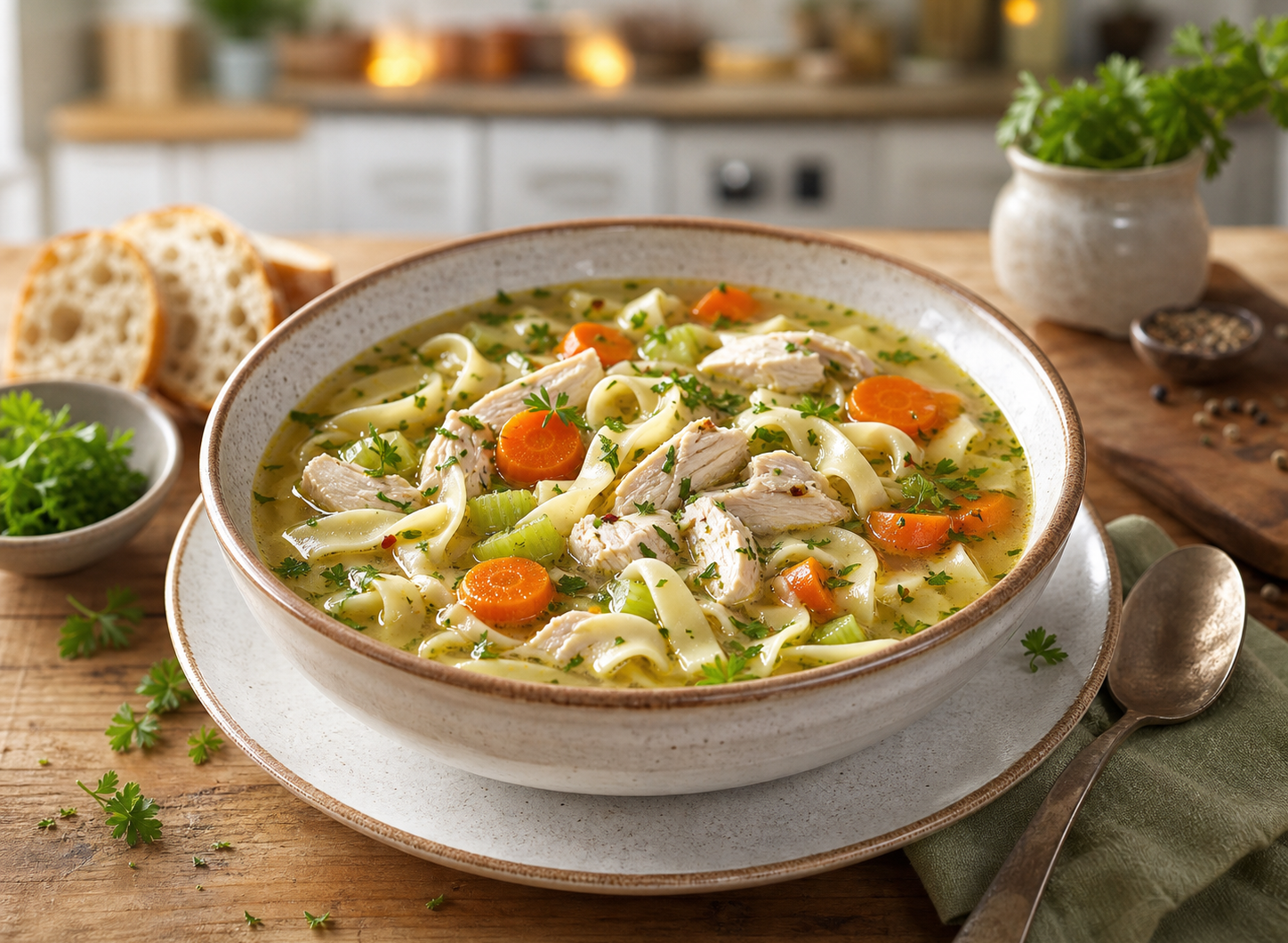
Healthy Chicken Noodle Soup Recipe
Classic chicken noodle soup made on the stovetop with rich chicken stock, celery, carrots, herbs, tender egg noodles, and rotisserie chicken. Comforting, simple, and ready in minutes.
8
servings20
minutes20
minutes206
kcal40
minutesIngredients
Butter — 7 g
Celery — 2 ribs, diced
Carrots — 3 to 4 large, diced
Garlic — 1 clove, minced
Chicken stock or broth — 2.37 l
Kosher salt — 5 g, to taste
Black pepper, freshly ground — 1 g, to taste
Rosemary, dried — 0.13 g, or more to taste
Thyme, dried — 0.13 g
Crushed red pepper flakes — 0.25 g
Egg noodles, homemade 1 batch; or dry egg noodles/farfalle/other small pasta — 4 cups if dry
Rotisserie chicken — 709.76 g, shredded or chopped
Chicken bouillon or chicken base — 6 g, or more as needed
Directions
- Melt butter in a large pot on medium‑high. Cook celery and carrots for 3 minutes; add garlic for 30 seconds. Pour in chicken stock. Season with rosemary, thyme, pepper flakes, salt, and black pepper. Taste; add a spoon of chicken bouillon if the broth seems flat.
- Bring to a boil. Add noodles and cook just to al dente. If using store‑bought pasta, remove from heat as soon as noodles are barely tender; they will keep softening.
- Stir in rotisserie chicken to warm through. Taste and adjust seasoning.
- Ladle into bowls. Refrigerate leftovers 4–5 days in airtight containers.
Nutrition Facts
- Calories: 206kcal
- Fat: 6g
- Cholesterol: 58mg
- Carbohydrates: 14g
- Fiber: 1g
- Sugar: 6g
- Protein: 23g
- Calcium: 31mg
- Iron: 1mg


