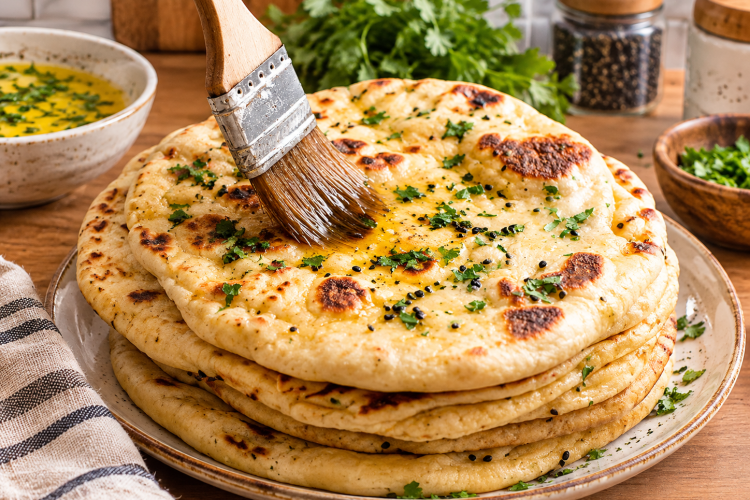
Homemade naan bread is one of the easiest ways to bring the taste of an Indian restaurant into your kitchen. This naan has a soft center, lightly crisp edges, golden bubbles, and a chewy texture that makes it different from an ordinary flatbread. It is cooked quickly in a very hot skillet so the dough develops those familiar browned spots.
What Makes This Naan Recipe Different
Many homemade naan recipes can turn out flat, dry, or more like simple flatbread. This version uses yeast, milk, egg, and melted ghee or butter to create a dough that stays soft after cooking. The short second rise also helps the dough become lighter before it reaches the hot skillet.
The Texture You Can Expect
A good naan should not feel stiff or brittle when you pick it up. The outside should have golden patches with a little char, while the inside remains tender and slightly chewy. When the skillet is hot enough, the surface of the dough begins to bubble as it cooks, creating the uneven texture associated with traditional naan.
Why Yeast Is Used in Naan
Instant yeast helps the dough rise and gives the bread a softer structure. In this recipe, the yeast is mixed with warm water and sugar before it is added to the flour. Although instant yeast usually does not need this step, allowing it to become foamy helps produce the soft texture needed for this particular naan bread.
Preparing the Naan Dough
The dough starts with warm water, instant yeast, and white sugar. After the mixture sits for about 10 minutes, milk and whisked egg are prepared separately. Flour and salt are combined in another bowl, then the wet ingredients and melted ghee or butter are added.
No Long Kneading Is Needed
One useful feature of this naan recipe is that the dough does not need extensive kneading. Once the flour has been mostly incorporated, your hands can bring everything together into a soft ball. This keeps the preparation simple and means you do not need to spend several minutes working the dough on the counter.
Letting the Dough Rise
The first rise is important because it gives the yeast time to work. Cover the bowl and leave it somewhere warm for about 1 to 1½ hours, or until the dough has doubled in size. A warm, draft-free place works best because a cold kitchen can slow down the rising process.
Dividing the Dough
Once the dough has risen, transfer it to a lightly floured surface and divide it into six equal pieces. Shape each portion into a smooth ball by stretching the outer surface and tucking the dough underneath. Keeping the pieces similar in size helps them cook at roughly the same speed.
The Second Rise
The shaped dough balls need another short rest before they are rolled out. Place them on a lightly floured tray or plate and cover them loosely with a lightweight tea towel. After about 15 minutes in a warm place, they should look slightly larger and softer, making them easier to roll.
Rolling the Naan
Take one dough ball at a time and flatten it gently with your hand. Roll it on a lightly floured surface until it becomes a thin round, around 3–4mm thick and approximately 16cm wide. Try not to press all the air out of the dough, as those small pockets help create bubbles during cooking.
Getting the Skillet Hot
A very hot cooking surface is one of the most important parts of making restaurant-style naan at home. A well-seasoned cast iron skillet works particularly well because it holds strong, steady heat. Rub the base with a very light coating of oil, then heat it until you see wisps of smoke.
Cooking Naan on the Stove
Place the rolled dough directly into the hot skillet. Cook the first side for about 1 to 1½ minutes, watching for bubbles and deep golden or slightly charred patches underneath. Turn the naan and cook the second side for about one minute, until the bubbles become browned and the bread is fully cooked.
Managing the Heat
The skillet needs to stay hot, but it can become too hot after cooking several naan breads. Watch the color of the dough as you continue. If the surface is burning before the inside cooks, reduce the heat slightly; if the naan stays pale and does not bubble well, the skillet may need more heat.
Finishing Fresh Naan
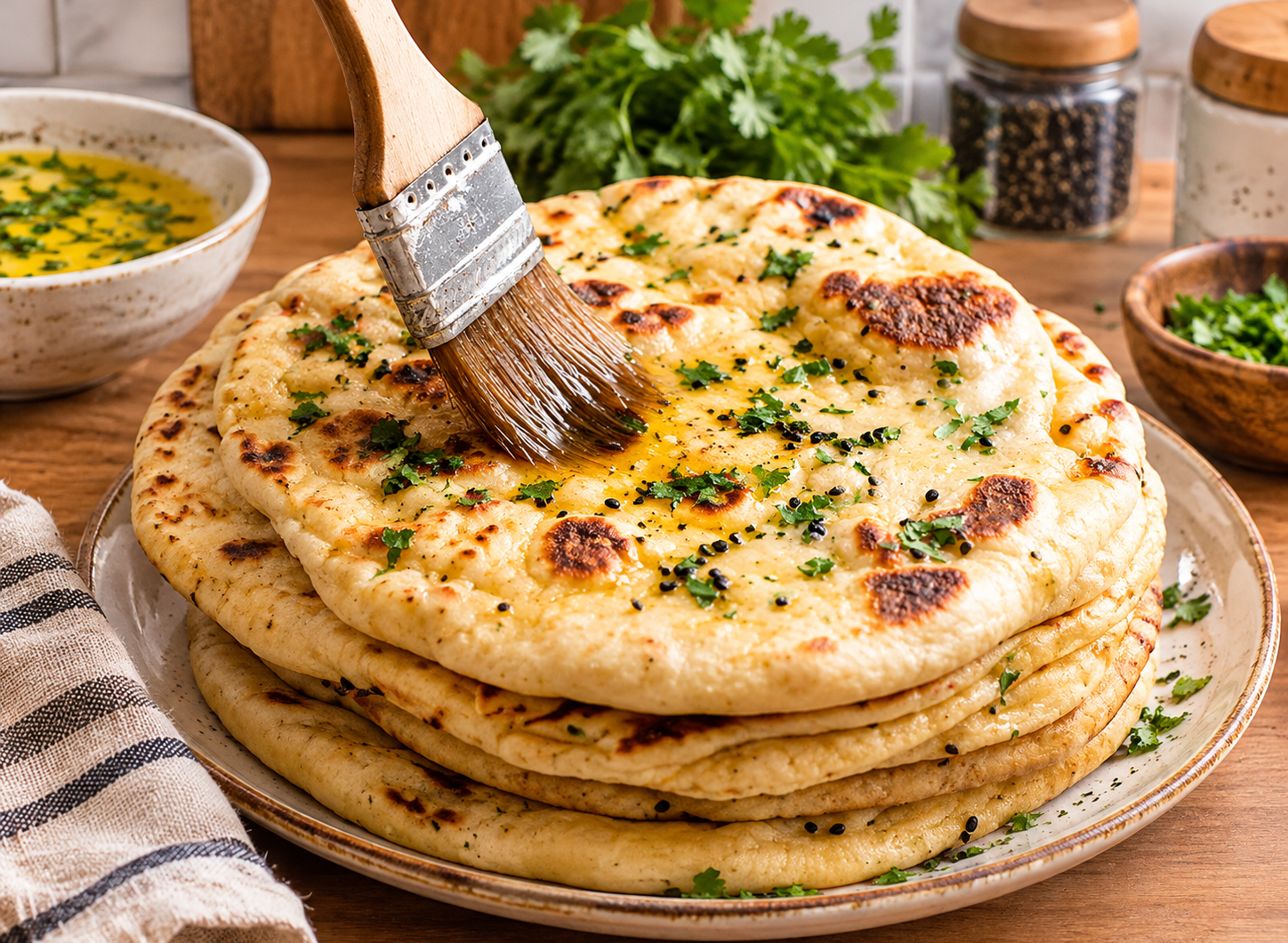
Freshly cooked naan is best brushed with melted ghee or butter while it is still hot. You can also add garlic butter for a stronger savory flavor. Nigella seeds and finely chopped coriander can be sprinkled over the top before serving.
Garlic Butter Naan
Garlic butter is an easy way to change the flavor without changing the main dough. Melt the butter or ghee with crushed garlic and allow it to stand briefly so the garlic flavor can spread through the fat. Brush this mixture over the hot naan immediately after cooking.
Making Cheese Naan
The same dough can also be used to make cheese naan. Roll the dough as usual, add a lightly packed mound of shredded melting cheese in the center, then gather the edges around the filling and twist to seal. Turn the filled dough over and gently roll it into a thicker round.
Choosing Cheese for the Filling
Several cheeses work well because the filling needs to melt while the naan cooks. Monterey Jack, cheddar, tasty, and Colby are suitable choices. Mozzarella can also melt nicely, although it has a milder flavor, so another cheese can be used when you want a stronger taste.
Why Egg Is Added
The recipe uses only 1½ tablespoons of whisked egg rather than a whole egg. This small amount contributes to the dough’s texture without making the inside too dry. If you prefer not to measure part of an egg, making a double batch allows you to use a whole egg.
Choosing the Flour
Bread flour gives the naan a particularly soft and fluffy texture, but all-purpose or plain flour can also be used. If bread flour is already in your pantry, it is a good option. There is no need to make a special shopping trip if you only have regular flour available.
Ghee or Butter
Ghee is clarified butter and is commonly used in Indian cooking. It has a rich buttery taste and works well for both the dough and the finishing layer. Unsalted butter can be used instead, so you can make this naan successfully even if ghee is not available.
Making the Dough Ahead
Naan dough can be prepared ahead of time when you want to reduce work on the day of serving. After the first rise, place the covered dough in the refrigerator without punching it down. It can remain chilled overnight and has also been prepared this way for up to 24 hours.
Bringing Chilled Dough Back to Temperature
Cold dough needs time to lose its refrigerator chill before the second rise. Take the bowl from the refrigerator at least a couple of hours before cooking. Divide the dough into six pieces and continue with shaping, resting, rolling, and cooking once the dough has warmed sufficiently.
Keeping Naan Soft
Naan is best served soon after it leaves the skillet. Brushing each piece with butter or ghee helps keep the surface tender and adds flavor. If you are cooking several pieces, keep the finished naan covered with a clean tea towel while you prepare the remaining dough.
Serving Homemade Naan
This homemade naan is ideal with Indian curries, creamy sauces, grilled meats, vegetables, and hearty stews. It can also be eaten on its own with butter or garlic butter. Tear it into pieces and use it to scoop up curry, or serve it alongside your favorite Indian-inspired meal.
Naan for Family Meals
Because this recipe makes six naan breads, it works well for a small family meal. The dough portions can be rolled and cooked one at a time, allowing everyone to enjoy warm bread at the table. You can also make a mixture of plain, garlic, and cheese naan from the same basic dough.
Using a Different Skillet
A cast iron skillet is recommended because it can handle the high temperature required for naan. Another suitable skillet can be used if cast iron is not available. However, a non-stick pan should not be used for this cooking method because the very high heat can damage its coating.
Getting the Signature Bubbles
The bubbles come from the moisture and gases inside the dough expanding quickly against the hot cooking surface. A properly heated skillet encourages the naan to puff and develop browned areas. Rolling the dough evenly and avoiding excessive flour also helps create a better surface during cooking.
Common Naan Problems
If the naan turns out hard, the dough may have been too dry or the bread may have been cooked for too long. If it stays pale and does not bubble, the skillet may not have been hot enough. Dough that does not rise properly can also lead to a heavier result, so give the yeast enough time to work.
Keeping the Dough Moist
When the dough is resting, cover it properly so the surface does not dry out. A dry outer layer can make shaping and rolling more difficult. A bowl covered with cling wrap during the first rise and a lightweight tea towel during the second rise helps protect the dough.
Serving Temperature
Naan has its best texture when served warm. The edges remain tender, the center stays chewy, and the melted butter or ghee adds a fresh richness. If you need to hold the naan for a short period, keep the cooked pieces covered rather than leaving them exposed to the air.
Naan bread
Soft homemade naan bread with a chewy center, golden bubbles, and lightly charred patches. This easy Indian naan recipe is cooked in a hot skillet and can be finished with butter, ghee, garlic butter, nigella seeds, or coriander. The same dough can also be used to make cheese naan.
6
naan20
minutes10
minutes223
kcal1
hour45
minutes2
hours15
minutesIngredients
- For the Dough
1 tsp instant / rapid rise yeast
1/2 cup warm tap water (~40°C/105°F in temperature)
1 tbsp white sugar
2 tbsp milk, full fat (low fat ok too)
1 1/2 tbsp whisked egg, at room temp (around 1/2 an egg)
1/2 tsp salt, cooking / kosher
1 3/4 cups bread flour, or all-purpose/plain
30g / 2 tbsp ghee or unsalted butter, melted
- For Finishing
30g / 2 tbsp tbsp ghee or butter, melted
1 small garlic clove, for Garlic Butter option
Nigella seeds
Coriander/cilantro, finely chopped
- For Cheese Naan
Shredded cheese (for cheese naan) – Monterey Jack, cheddar, tasty, colby, anything that melts (shred yourself)
Directions
- Mix the yeast, warm water, and white sugar in a small bowl. Cover and leave for 10 minutes, until the mixture becomes foamy. Whisk the milk and egg together separately. Sift the flour and salt into another bowl.
- Create a well in the flour and add the yeast mixture, melted ghee or butter, and milk-and-egg mixture. Mix with a spatula until most of the flour is incorporated, then use your hands to bring the dough together. Cover and leave in a warm place for 1–1½ hours, until doubled in size.
- Place the risen dough on a lightly floured surface and divide it into 6 equal pieces. Shape each piece into a smooth ball and place them on a lightly floured tray. Cover loosely and leave in a warm place for 15 minutes.
- Flatten one dough ball and roll it into a 3–4mm thick round, about 16cm wide. Heat a lightly oiled cast iron skillet over high heat. Cook the naan for 1–1½ minutes until bubbly with deep golden patches, then turn and cook the other side for about 1 minute.
- Remove the cooked naan and brush it with melted ghee or butter. Add garlic butter if desired, then sprinkle with nigella seeds and finely chopped coriander. Repeat with the remaining dough while adjusting the skillet heat as needed.
- For cheese naan: Roll out the dough, add about 1/4 cup lightly packed shredded cheese in the center, then gather and seal the dough around the filling. Turn it smooth-side up and roll to about 6–7mm thick. Cook in a hot, well-seasoned skillet for about 1½ minutes on the first side and around 45 seconds on the second side.
Notes
- Nutrition information excludes extra ghee or butter brushed over the naan and does not include cheese filling.
Nutrition Facts (Per naan)
- Calories: 223kcal
- Fat: 10g
- Cholesterol: 36mg
- Sodium: 277mg
- Potassium: 53mg
- Carbohydrates: 29g
- Fiber: 1g
- Sugar: 2g
- Protein: 5g


