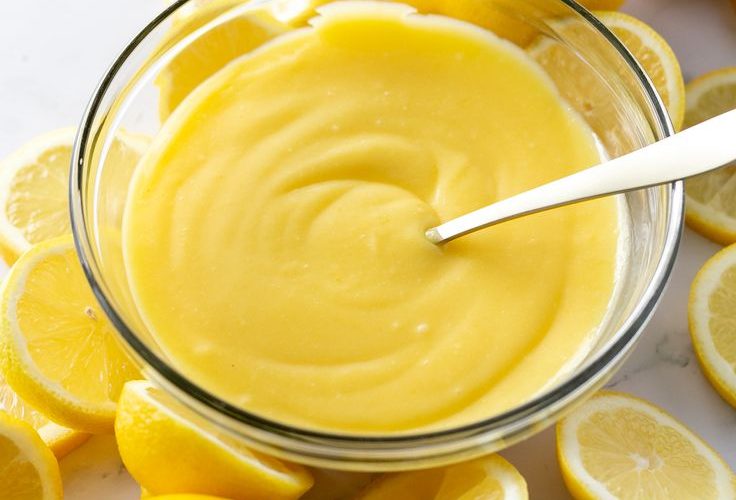
Homemade lemon curd is one of those simple recipes that can make so many desserts taste special. It is bright, creamy, smooth, buttery, and full of fresh lemon flavor. The taste has a lovely balance between sweet and tart, making it delicious enough to eat with a spoon while also being useful in cakes, pastries, tarts, cookies, pancakes, waffles, and many other sweet treats.
The best thing about making lemon curd at home is that you do not need complicated ingredients. A few fresh lemons, eggs, sugar, butter, and a little salt are enough to create a rich and silky spread. You can also add vanilla extract if you like. The ingredients are simple, but the final result feels much more special than the effort required.
The most important part of this recipe is cooking the mixture slowly. Lemon curd contains eggs, so it needs gentle heat. If the heat is too high, the eggs can cook too quickly and become scrambled. When the mixture is cooked slowly while being stirred constantly, the eggs thicken the lemon mixture into a smooth, creamy curd.
Fresh lemons are especially important because both the juice and zest are used. The juice gives the curd its fresh, sharp lemon taste, while the zest adds a stronger citrus aroma. Freshly squeezed lemon juice gives a much brighter flavor than bottled juice.
What Is Lemon Curd?
Lemon curd is a thick, creamy spread made mainly from lemon juice, eggs, sugar, and butter. It has a soft custard-like texture when warm and becomes thicker after it cools and is refrigerated.
It can be used in many different ways. You can spread it over toast, spoon it onto pancakes, use it between cake layers, fill cupcakes, add it to pastries, or serve it with berries and whipped cream.
Because the flavor is both sweet and tart, lemon curd works especially well with desserts that are rich, creamy, or buttery. A small amount can add a fresh citrus flavor and keep a dessert from tasting too heavy.
Why This Lemon Curd Is Worth Making
There are many reasons to make lemon curd at home.
First, the ingredients are easy to find. You do not need any unusual ingredients or special equipment. A saucepan, bowl, whisk, spatula, and fine-mesh strainer are enough.
Second, homemade lemon curd has a fresh lemon flavor. The combination of lemon juice and finely grated zest gives the curd a strong citrus taste and pleasant aroma.
Third, the texture is wonderfully smooth. Butter adds richness and helps create the silky finish that makes lemon curd so enjoyable.
This recipe is also useful because it can be prepared ahead of time. Once cooled, the curd can be kept in the refrigerator and used whenever you need a quick filling or topping.
Ingredients You Need
For the lemon curd, you will need:
- 4 large fresh lemons
- 3 large eggs
- 1 large egg yolk
- ¾ cup granulated sugar
- ½ cup fresh lemon juice
- 1 tablespoon finely grated lemon zest
- ½ cup unsalted butter, cut into small pieces
- A pinch of salt
- 1 teaspoon vanilla extract, optional
The ingredients should be measured carefully because the balance between lemon juice, sugar, eggs, and butter gives the curd its final texture and flavor.
Choosing Fresh Lemons
Fresh lemons are the best choice for this recipe. Look for lemons that feel heavy for their size and have smooth, brightly colored skin.
Since the lemon zest is used, organic lemons can be a good choice when available. The peel is an important part of the recipe because the zest gives the curd extra citrus aroma.
Before using the lemons, wash them well and dry them completely.
Preparing the Lemon Zest and Juice
Begin by washing and drying the lemons.
Use a fine grater or microplane to remove the yellow outer layer of the lemon peel. Try not to grate into the white layer underneath. The white part, called the pith, can have a bitter taste.
You need about 1 tablespoon of finely grated lemon zest.
Next, cut the lemons in half and squeeze them to get the juice. You will need about ½ cup of fresh lemon juice. After squeezing, pour the juice through a fine-mesh strainer. This removes seeds and larger pieces of pulp and gives you clean lemon juice for the curd.
Fresh lemon juice is strongly recommended because it gives the finished curd a fresher and brighter citrus flavor.
Mix the Eggs and Sugar
Place the 3 eggs, 1 egg yolk, and granulated sugar in a medium heatproof bowl.
Whisk them together until the mixture looks smooth and slightly lighter in color. You do not need to beat the eggs very hard. The main goal is to combine the eggs and sugar evenly.
Add the finely grated lemon zest and a pinch of salt.
The sugar helps balance the natural sourness of the lemons. It also contributes to the smooth texture of the finished curd.
Add the Fresh Lemon Juice
Slowly pour the fresh lemon juice into the egg mixture while whisking.
Continue mixing until the lemon juice is fully combined with the eggs and sugar.
At this point, the mixture will look thin and pale yellow. That is normal. It will become thick as it cooks.
Cook the Lemon Curd Slowly
Pour the mixture into a saucepan. You can also place the heatproof bowl over a saucepan containing a small amount of gently simmering water to create a double boiler.
Cook the mixture over low to medium-low heat.
This is the most important stage of the recipe. Keep stirring constantly with a silicone spatula or whisk as the mixture heats.
Do not use high heat. The eggs need time to thicken the mixture slowly. If the temperature becomes too high, the eggs may cook too quickly and form scrambled pieces.
Cook for approximately 8–12 minutes, depending on the heat level and the size of your pan.
As the mixture cooks, you will notice that it slowly becomes thicker.
How to Tell When the Curd Is Ready
There are a few simple ways to check the lemon curd.
The easiest method is the spoon test. Dip a spoon into the curd and lift it out. The curd should cover the back of the spoon.
Run your finger through the coating on the spoon. If the line stays clear instead of flowing back together immediately, the curd is ready.
If you have a kitchen thermometer, the curd will generally thicken around 170–175°F (77–80°C).
The finished curd should look glossy and thick but should still be pourable while hot. Do not expect it to be extremely thick at this stage because it will become firmer as it cools.
Add the Butter
Once the curd reaches the right consistency, remove the saucepan from the heat.
Add the butter pieces one at a time. Stir after each addition until the butter has completely melted into the curd.
Continue stirring until the mixture becomes smooth and glossy.
The butter gives the lemon curd its rich, silky texture and helps create the luxurious finish that makes homemade curd so delicious.
If you are using vanilla extract, add 1 teaspoon now and stir it into the mixture.
Strain for an Extra-Smooth Texture
For the smoothest possible lemon curd, pour the warm mixture through a fine-mesh sieve into a clean bowl.
Use a spatula to gently press the curd through the sieve.
Straining removes any tiny pieces of cooked egg or other small bits that may have formed during cooking. This step is especially useful if you plan to use the curd as a cake filling or tart filling.
Even if the curd already looks smooth, straining it can give it an especially silky final texture.
Cool the Lemon Curd
Once the curd has been strained, place a piece of plastic wrap directly against its surface.
This helps stop a skin from forming while the curd cools.
Leave the curd at room temperature for about 20–30 minutes. After that, transfer it to the refrigerator.
The curd will become noticeably thicker as it chills.
How to Know Your Lemon Curd Is Perfect
The finished lemon curd should have a smooth, glossy appearance. It should be thick enough to coat a spoon but still soft enough to spread.
Remember that the curd continues to firm up in the refrigerator. If it looks slightly loose while warm, do not automatically continue cooking it. Give it time to cool and chill first.
The spoon test is usually the easiest way to check the texture. A thermometer can also help if you want a more precise check.
Important Tips for Smooth Lemon Curd
Keep the Heat Low
Gentle cooking is the biggest secret to smooth lemon curd. High heat can make the eggs cook too quickly.
Keep the heat low to medium-low and stir continuously.
Always Use Fresh Lemon Juice
Fresh lemon juice gives the curd a bright, natural citrus flavor. Bottled juice can be used, but fresh juice is recommended for the best result.
Do Not Leave Out the Lemon Zest
Lemon zest contains natural citrus oils that give the curd a stronger lemon aroma. The zest makes the lemon flavor more noticeable without simply making the curd more sour.
Stir Constantly
Keep stirring while the curd cooks. Constant stirring helps spread the heat evenly and prevents the mixture from sticking to the bottom of the pan.
Strain the Finished Curd
Straining is an easy extra step that makes the final texture smoother. It is particularly helpful when the curd will be used inside cakes, tarts, cupcakes, or pastries.
Ways to Use Homemade Lemon Curd
One of the best things about lemon curd is how many ways you can use it.
Spread It on Toast
Chilled lemon curd makes a bright and flavorful spread for toast, English muffins, or fresh bread.
Serve It with Scones
Warm scones and lemon curd make a lovely afternoon treat. The buttery scone pairs beautifully with the fresh lemon flavor.
Use It Between Cake Layers
Lemon curd can be spread between layers of vanilla, lemon, coconut, white chocolate, almond, strawberry, blueberry, or sponge cake.
For the best result, chill the curd completely before using it as a cake filling.
If you want extra support around the filling, spread a thin layer of buttercream around the outside edge of the cake layer before adding the lemon curd. This creates a barrier that helps keep the curd inside the cake.
Fill Cupcakes
You can remove a small portion from the center of vanilla cupcakes and fill the space with chilled lemon curd.
Make Lemon Tarts
Lemon curd works beautifully as a filling for sweet pastry shells. Its creamy texture and fresh lemon flavor make a simple tart feel special.
Add It to Pancakes and Waffles
Spoon lemon curd over pancakes or waffles and add fresh berries on top for an easy breakfast or dessert.
Swirl It into Yogurt
A little lemon curd mixed into Greek yogurt makes a quick and simple sweet dish.
Layer It with Berries
For an easy dessert, layer lemon curd with whipped cream and fresh berries.
Add It to Pastries
Lemon curd can be used in croissants, Danish pastries, sweet buns, and puff pastry desserts.
Simple Lemon Curd Variations
The basic recipe can also be changed into different citrus flavors.
Meyer Lemon Curd
If Meyer lemons are available, they can be used instead of regular lemons. Meyer lemons have a naturally sweeter and more floral flavor.
Lime Curd
Replace the lemon juice and zest with fresh lime juice and lime zest. Lime curd works especially well with coconut desserts.
Orange Curd
Replace some or all of the lemon juice with fresh orange juice. Orange curd has a sweeter citrus flavor and pairs nicely with chocolate desserts.
Lemon-Ginger Curd
Add a small amount of freshly grated ginger while cooking. The warm flavor of ginger works well with bright lemon.
Lemon-Blueberry Dessert
For a simple no-bake dessert, layer lemon curd with fresh blueberries, whipped cream, and crushed cookies.
Common Mistakes to Avoid
The most common mistake is cooking the curd over high heat. This can cause the eggs to scramble.
Another problem is not stirring enough. If the mixture is left unattended, it may stick to the bottom or develop cooked egg pieces.
Using too much lemon zest can also make the curd bitter, so keep the amount at the stated 1 tablespoon.
Do not skip straining if you want an especially smooth texture.
Also, remember that lemon curd is not supposed to be very thick while it is hot. It becomes firmer after cooling and refrigeration.
Finally, always cover the surface while the curd cools or keep it in an airtight container. This helps prevent a skin from forming.
How to Store Lemon Curd
Once the lemon curd has completely cooled, transfer it to a clean airtight container.
Keep it refrigerated for up to 1–2 weeks.
Always use a clean spoon when serving so the curd stays fresh.
For longer storage, lemon curd can also be frozen. Place it in a freezer-safe container and leave a little room at the top because the curd may expand as it freezes.
It can be frozen for approximately 2–3 months.
When you want to use it, thaw it overnight in the refrigerator and stir it well before serving.
Frequently Asked Questions
Can I Make Lemon Curd Without Butter?
Yes. Butter adds richness and gives the curd its silky texture, but a butter-free version can also be made. Without butter, the curd will be lighter and less rich.
Why Did My Lemon Curd Become Lumpy?
The eggs may have cooked too quickly. Next time, use lower heat and keep stirring continuously. If small lumps still appear, strain the finished curd through a fine-mesh sieve.
Can I Use Bottled Lemon Juice?
Yes, bottled lemon juice can be used, but fresh lemon juice is strongly recommended for the best flavor.
Why Is My Lemon Curd Too Thin?
The curd may need a little more cooking, or it may simply need more time to chill. Lemon curd becomes considerably thicker when refrigerated.
Can I Make It Sweeter?
Yes. The sugar can be adjusted according to your taste and the natural acidity of your lemons.
Can I Make Lemon Curd Ahead of Time?
Yes. Lemon curd is a useful make-ahead recipe. You can prepare it a day or two before you need it and keep it refrigerated.
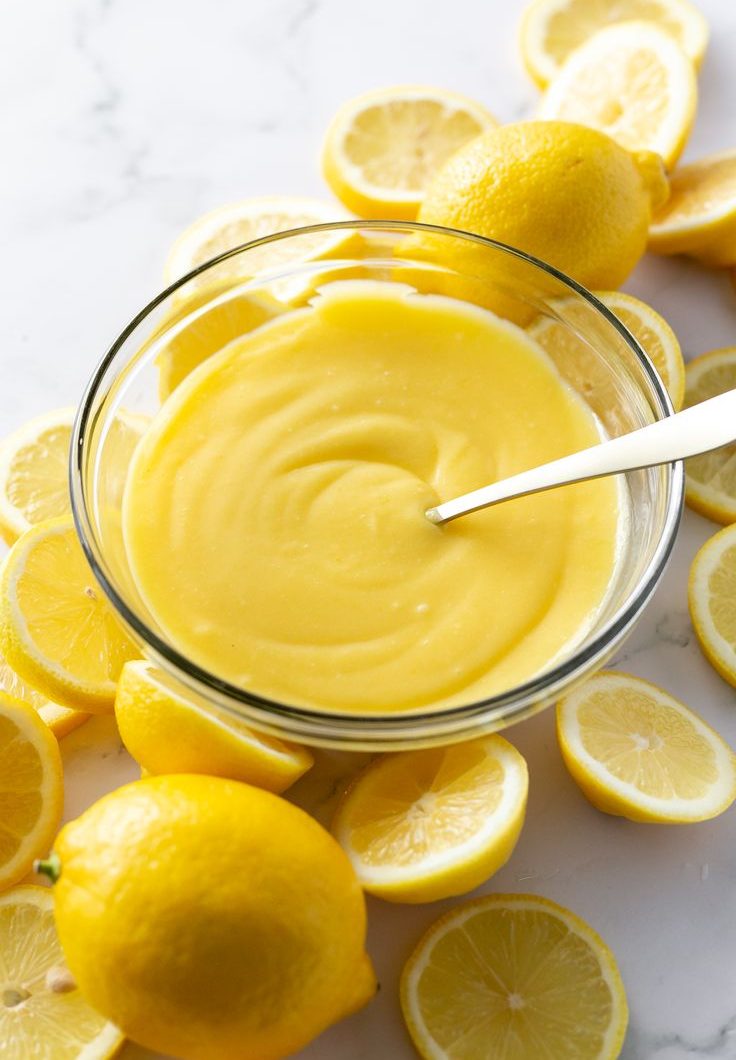
Easy Homemade Lemon Curd Recipe
This homemade lemon curd is smooth, creamy, buttery, and full of fresh lemon flavor. It has a delicious sweet-and-tart taste and can be used as a spread, cake filling, tart filling, pastry filling, or topping for pancakes, waffles, scones, yogurt, and fresh berries.
10
minutes12
minutes120
kcal30
minutes48
minutesIngredients
4 large fresh lemons
3 large eggs
1 large egg yolk
¾ cup granulated sugar
½ cup fresh lemon juice
1 tablespoon finely grated lemon zest
½ cup unsalted butter, cut into small pieces
Pinch of salt
1 teaspoon vanilla extract, optional
Directions
- Wash and dry the lemons. Finely grate the yellow outer peel until you have 1 tablespoon of lemon zest. Avoid grating the white pith because it can taste bitter.
- Cut the lemons in half and squeeze them. Strain the juice through a fine-mesh strainer to remove seeds and large pieces of pulp. Measure ½ cup of fresh lemon juice.
- Add the eggs, egg yolk, and sugar to a medium heatproof bowl. Whisk until smooth and slightly lighter in color.
- Add the lemon zest and a pinch of salt.
- Slowly whisk the fresh lemon juice into the egg mixture until everything is well combined.
- Pour the mixture into a saucepan, or place the heatproof bowl over a saucepan with a small amount of gently simmering water to make a double boiler.
- Cook over low to medium-low heat while stirring constantly with a silicone spatula or whisk.
- Continue cooking for about 8–12 minutes, depending on the heat and size of the pan. The mixture will slowly become thicker.
- Check the curd by coating the back of a spoon. Run your finger through the coating. If the line stays clear, the curd is ready. If using a thermometer, it should generally reach 170–175°F (77–80°C).
- Remove the saucepan from the heat.
- Add the butter pieces one at a time, stirring after each addition until completely melted and mixed in.
- Continue stirring until the curd is smooth and glossy. If using vanilla extract, stir it in now.
- Pour the warm curd through a fine-mesh sieve into a clean bowl. Gently press it through with a spatula to remove any small cooked egg pieces.
- Cover the surface directly with plastic wrap to prevent a skin from forming.
- Let the curd cool at room temperature for about 20–30 minutes, then transfer it to the refrigerator. The curd will become thicker as it chills.
Notes
- Use fresh lemon juice for the brightest flavor.
- Keep the heat low to prevent the eggs from scrambling.
- Stir the curd continuously while cooking.
- Do not worry if the curd looks slightly thin while hot; it thickens as it cools.
- Strain the finished curd for the smoothest texture.
- Use a clean airtight container for refrigerator storage.
- Refrigerate for up to 1–2 weeks.
- For longer storage, freeze for approximately 2–3 months.
- Thaw frozen lemon curd overnight in the refrigerator and stir well before using.
Nutrition Facts
Per 2-tablespoon serving:
- Calories: 120kcal
- Fat: 7g
- Carbohydrates: 13g
- Sugar: 12g
- Protein: 1g


