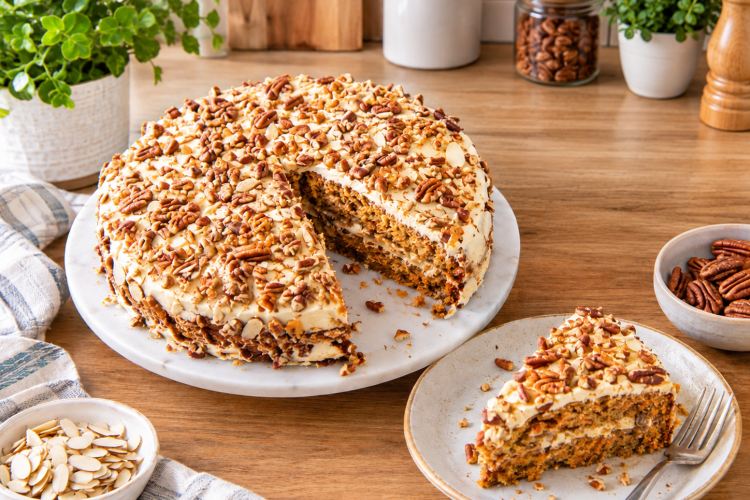
This healthy keto carrot cake is soft, moist, and filled with the warm flavor of cinnamon and fresh carrots. Instead of refined wheat flour, the recipe uses blanched almond flour to create a tender crumb. Monk fruit allulose blend provides sweetness, while chopped pecans add a pleasant crunch to every bite.
A Low-Carb Carrot Cake
Carrot cake is usually made with refined flour and a generous amount of sugar. This version changes those traditional ingredients while keeping the familiar combination of carrots, cinnamon, pecans, and cream cheese frosting. The result is a rich dessert that fits a low-carb eating plan.
Each slice contains 5.5 grams of listed net carbohydrates according to the supplied recipe information. The cake is also described as gluten-free and sugar-free, making it suitable for people looking for an alternative to a traditional carrot cake.
What Gives the Cake Its Texture
The texture comes from a careful balance of almond flour, eggs, butter, and freshly grated carrots. Almond flour provides the base, while eggs help hold the mixture together. Butter adds richness and helps keep the baked layers tender.
Fresh carrots contribute moisture and a natural sweetness. Pecans provide small crunchy pieces throughout the cake, creating a contrast with the soft crumb and smooth frosting.
Choosing Blanched Almond Flour
Blanched almond flour is the main flour in this recipe. Its fine texture works well for cakes and gives the batter a smoother consistency than coarse almond meal.
Avoid replacing it with coconut flour in the same quantity. The source specifically states that coconut flour does not work for this recipe because it can make the cake too dry. Almond meal can also create a grainier texture.
Selecting the Sweetener
The recipe uses Besti Monk Fruit Allulose Blend to sweeten the cake without regular sugar. The sweetener is mixed with softened butter at the beginning, helping create the base of the batter.
Plain allulose can also be used according to the source’s suggested conversion. Other monk fruit or stevia products may work, but their ingredients can affect moisture and texture.
Fresh Carrots Make a Difference
Freshly grated carrots are preferable to packaged shredded carrots for this cake. Pre-shredded carrots can be dry, while freshly grated vegetables provide better moisture and texture.
Grate the carrots just before preparing the batter. After grating, measure them loosely rather than pressing them firmly into the measuring cup. Too many carrots can add excess moisture and change the structure of the cake.
Getting the Carrots Ready
The carrots can be grated finely or coarsely depending on the texture you prefer. A coarse grate leaves more noticeable pieces throughout the cake, while a fine grate blends more evenly into the batter.
If your carrots are particularly wet, gently squeeze out some of the excess moisture before adding them. They do not normally need to be drained, but very wet carrots can affect the final consistency.
Why Butter Is Used
Softened unsalted butter gives the cake richness and helps create a light batter when beaten with the sweetener. It should be soft enough to mix easily but should not be completely melted.
The ingredient list also provides coconut oil or ghee as alternatives for the listed dietary variations. These substitutions can alter the finished flavor and texture, so butter gives the result closest to the supplied recipe.
The Role of Eggs
Four large eggs provide structure and help bind the almond flour, carrots, and pecans. Using eggs at room temperature makes them easier to blend with the softened butter.
The source mentions that baking egg substitutes may work, but the cake can become more fragile. For the original recipe, use the four large eggs listed in the ingredient list.
Cinnamon and Vanilla
Cinnamon gives the cake its warm, familiar carrot-cake flavor. Vanilla extract adds another layer of sweetness and aroma without requiring extra sugar.
Sea salt is also included in a small amount. It helps balance the sweetness and keeps the spice flavors from becoming too flat.
Optional Flavor Additions
Blackstrap molasses and pineapple extract are optional ingredients in the recipe. They are included to bring flavors associated with traditional carrot cake without adding actual pineapple or a large amount of sugar.
The tablespoon of molasses adds a deeper flavor, while the small amount of pineapple extract gives a subtle fruity character. Both can be omitted if you prefer a simpler flavor profile.
Using Baking Powder
Baking powder helps the cake rise during baking. It is mixed with the almond flour, cinnamon, and sea salt before those ingredients are combined with the wet mixture.
The recipe specifically uses baking powder rather than baking soda. These ingredients are not interchangeable in equal quantities, so follow the supplied amount when preparing the cake.
Adding Pecans
Pecans are used in two places. One cup is mixed directly into the batter, while the remaining half cup is reserved for decorating the top of the finished cake.
Chopped pecans give the soft cake layers a bit of crunch. The source also mentions walnuts as an alternative, but the original ingredient list uses pecans, so the recipe card keeps them unchanged.
Preparing the Cake Pans
Begin by heating the oven to 350°F, or 177°C. Line the bottoms of two 9-inch round cake pans with parchment paper and grease the bottoms and sides.
Springform pans can make the layers easier to remove after baking. Regular cake pans work as well, but a knife may be needed around the edges if the cake sticks after cooling.
Mixing the Wet Ingredients
Place the softened butter and monk fruit allulose blend in a large mixing bowl. Beat them together with a hand mixer until fluffy.
Add the blackstrap molasses, if using, followed by vanilla extract and pineapple extract. Beat in the eggs one at a time, allowing each egg to blend into the mixture before adding the next.
Combining the Dry Ingredients
In a separate bowl, stir together the blanched almond flour, baking powder, cinnamon, and sea salt. Mixing these ingredients separately helps distribute the baking powder and spices throughout the flour.
Add the dry mixture to the bowl containing the wet ingredients. Stir until the batter is combined, but avoid excessive mixing once the flour has been incorporated.
Folding in the Carrots
Add the grated carrots to the batter and fold them in gently. The goal is to spread the carrot pieces evenly without aggressively mixing the batter.
Next, fold in one cup of the chopped pecans. Keep the remaining half cup aside because it will be used after the cake has been frosted.
Dividing the Batter
Spoon the finished batter evenly between the two prepared cake pans. Smooth the tops with a spatula so the layers bake as evenly as possible.
Dividing the mixture evenly is especially helpful when the two cakes will later be stacked. Similar layer thicknesses make assembly easier and give the finished cake a balanced appearance.
Baking the Layers
Place both pans in the preheated oven and bake for 25 to 30 minutes. Halfway through the baking time, switch their positions so both layers have a similar exposure to the oven’s heat.
The cakes should be golden brown when finished. Insert a toothpick into the center; if it comes out clean, the layers are ready. The tops should also spring back gently when touched.
Cooling the Cake
Leave the baked cakes in their pans for 10 minutes after removing them from the oven. Then carefully transfer them to a wire rack.
Allow both layers to cool completely before adding frosting. Warm cake can be delicate, and applying frosting too early can cause it to soften and become difficult to spread.
Preparing the Cream Cheese Frosting
The recipe uses two portions of sugar-free cream cheese frosting. This doubled amount is intended to provide enough frosting for the center and top of the cake.
If the frosting has been refrigerated, bring it back to room temperature before assembling the layers. Firm, cold frosting can pull at the cake surface and make spreading more difficult.
Building the Cake
Place one cooled cake layer on a serving plate or cake stand. Spread a layer of cream cheese frosting across the top, keeping the surface as even as possible.
Place the second cake layer over the frosting. Spread more frosting across the top, then finish with the reserved chopped pecans.
Decorating the Top
The remaining half cup of chopped pecans provides a simple topping that matches the nuts inside the cake. Spread them evenly across the frosted surface or concentrate them around the center.
The cake can be served without additional decoration. The golden-brown layers, white frosting, and chopped pecans already give it a classic homemade carrot cake appearance.
Getting a Smooth Batter
If the wet mixture sits for a while before the dry ingredients are added, it may begin to separate. This is not necessarily a problem. Briefly beat the wet mixture again before continuing with the recipe.
Another useful approach is to prepare the dry ingredients before beginning the wet mixture. This keeps the preparation organized and reduces the time between mixing stages.
Measuring Almond Flour Correctly
Use a measuring cup to scoop the almond flour and then level the top with a knife. Do not press the flour down into the cup.
Packing the flour can increase the quantity used in the recipe. Since almond flour contributes significantly to the structure of the cake, too much can result in a denser or drier texture.
Handling the Frosting
Make sure the frosting is soft enough to spread before assembling the cake. If it is very cold, allow it to sit at room temperature until it becomes easier to work with.
The doubled frosting amount is enough for the filling and top. If you want to cover the sides as well, additional frosting will be necessary.
Choosing the Carrot Grate
The size of the carrot shreds affects the final texture. Coarse pieces remain more noticeable after baking and give the cake a hearty bite.
Finely grated carrots blend more closely into the batter and can create a more uniform texture. Either approach can work as long as the total amount remains the same.
Preparing the Cake in Advance
This carrot cake can be made a day before serving. Once assembled, cover it gently and refrigerate it until needed.
The supplied recipe states that it is best within a couple of days for an occasion, although leftovers may last for up to a week when stored properly in the refrigerator.
Freezing for Later
The assembled cake can also be frozen. Place it in the freezer uncovered first and wait until the frosting becomes firm.
Once the frosting is solid, wrap the cake tightly and keep it frozen for up to three months. Transfer it to the refrigerator and allow it to thaw overnight before serving.
Storage Information
Because the cake contains cream cheese frosting, it should be kept refrigerated when it is not being served. Store it in a covered container or wrap it carefully to help protect the texture.
For the best quality, serve the cake within the first few days. Longer storage may still be possible according to the supplied recipe, but the texture and freshness can gradually change.
Healthy Carrot Cake Without Sugar or Refined Flour
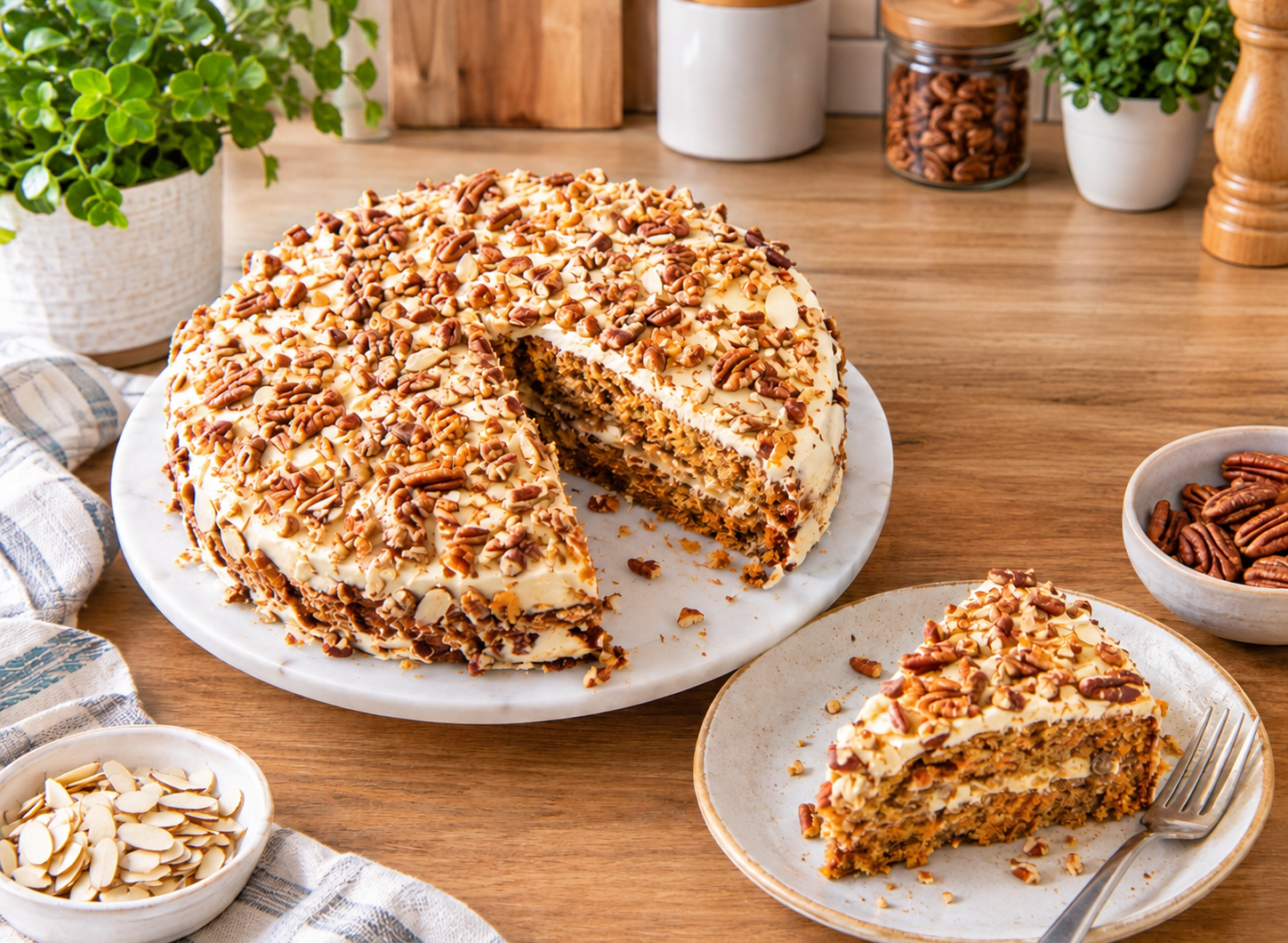
A soft and moist carrot cake made with blanched almond flour, fresh grated carrots, cinnamon, pecans, and monk fruit allulose blend. Two tender cake layers are finished with sugar-free cream cheese frosting and chopped pecans.
16
servings25
minutes30
minutes359
kcal5.5
g55
minutesIngredients
3/4 cup unsalted butter, softened; coconut oil or ghee for the listed dietary variation
3/4 cup Besti Monk Fruit Allulose Blend; coconut sugar for the listed paleo variation
1 tablespoon blackstrap molasses, optional
1 tablespoon blackstrap molasses, optional
1 teaspoon vanilla extract
1/2 teaspoon pineapple extract, optional
1/2 teaspoon pineapple extract, optional
1/2 teaspoon pineapple extract, optional
4 large eggs, at room temperature
2 1/2 cups blanched almond flour
2 teaspoons baking powder
2 teaspoons baking powder
2 teaspoons cinnamon
1/2 teaspoon sea salt
2 1/2 cups carrots, grated and loosely packed after grating
1 1/2 cups pecans, chopped; divide into 1 cup and 1/2 cup
2 recipes sugar-free cream cheese frosting
Directions
- Prepare the pans: Heat the oven to 350°F (177°C). Line two 9-inch round cake pans with parchment paper and grease the bottoms and sides.
- Mix the wet ingredients: Beat the softened butter and monk fruit allulose blend until fluffy. Add molasses, vanilla, pineapple extract, if using, and the eggs one at a time.
- Add the dry mixture: Combine almond flour, baking powder, cinnamon, and sea salt in another bowl. Stir this mixture into the wet ingredients until combined.
- Add carrots and pecans: Fold in the grated carrots and 1 cup of chopped pecans. Divide the batter evenly between the prepared pans.
- Bake and cool: Bake for 25–30 minutes, switching the pan positions halfway through. Cool the cakes in their pans for 10 minutes, then transfer them to a wire rack and cool completely.
- Frost and finish: Place one cake layer on a serving plate, spread with cream cheese frosting, add the second layer, and frost the top. Sprinkle the remaining 1/2 cup chopped pecans over the cake.
Nutrition Facts
- Calories: 359kcal
- Fat: 34g
- Carbohydrates: 8.5g
- Fiber: 3g
- Protein: 7.5g


