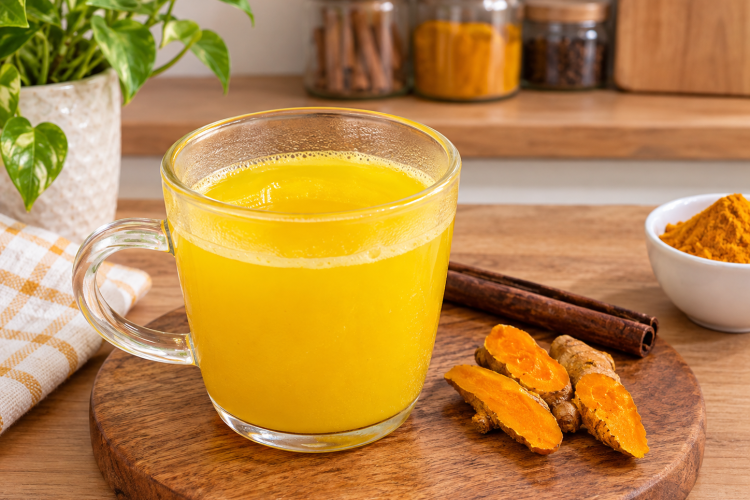
Turmeric Lemon Ginger Cinnamon Honey Tea is a warm, caffeine-free drink made with fresh turmeric, ginger, cinnamon, lemon, honey, and water. It has a naturally golden color and a gentle balance of earthy, spicy, sour, and sweet flavors. This simple homemade tea can be enjoyed in the morning, during a cold day, or as a relaxing drink in the evening.
A Simple Homemade Herbal Tea
This turmeric tea recipe is easy to prepare with a few basic ingredients. Fresh turmeric gives the drink its deep golden shade, while ginger adds warmth and a light spicy taste. Cinnamon brings a mild sweetness and familiar spice, while lemon gives the mixture a fresh, bright finish.
Why Fresh Turmeric Works Well
Fresh turmeric root is the preferred choice for this drink because it gives a cleaner flavor and smoother appearance than powdered turmeric. When ground turmeric is used, some of the spice may remain suspended in the liquid, which can create a slightly powdery texture.
Fresh turmeric also needs very little preparation. Peel the root with the back of a spoon and slice it into thin pieces. This method removes the skin without taking away too much of the flesh, making it a practical way to prepare the root for homemade tea.
Choosing Good Turmeric
When buying fresh turmeric, look for firm roots without soft spots, mold, or excessive dryness. If you choose turmeric powder instead, select a product from a reputable food supplier. Quality matters because spices can vary considerably in freshness and purity.
For this recipe, fresh turmeric also gives the drink a more natural appearance. The bright yellow-orange color becomes especially noticeable after the turmeric simmers with ginger and cinnamon.
Fresh Ginger Adds Warmth
Fresh ginger root gives this herbal tea its warm and slightly spicy character. Six to ten slices provide a flexible starting point, allowing you to adjust the strength according to your taste. If you prefer a stronger ginger flavor, use the higher amount or grate the root before cooking.
Sliced ginger is convenient because it can be removed easily before serving. Grated ginger releases more flavor but also leaves small pieces of pulp in the drink. If you use grated ginger, strain the finished tea through a fine-mesh strainer for a smoother cup.
Choosing the Right Cinnamon
Cinnamon is another important part of this turmeric ginger tea. Ceylon cinnamon is recommended for this recipe rather than cassia. Ceylon cinnamon usually has a lighter tan-brown color and thinner layers, while cassia tends to be darker and thicker.
A whole cinnamon stick can simmer directly in the pot with the other ingredients. Cinnamon powder can also be used as a substitute, although it may leave some sediment in the finished drink. A cinnamon stick is a simple option when you want a clearer beverage.
The Role of Lemon
Fresh lemon juice gives this tea a pleasant sour note that balances the earthy turmeric and warming ginger. Add the lemon after simmering rather than cooking it for the full ten minutes. This keeps its fresh citrus character more noticeable in the finished drink.
For the best amount of juice, roll the lemon firmly against the countertop before cutting it. You can also warm it slightly at room temperature before squeezing. These small steps can help release more liquid from the fruit.
Sweetening With Honey
Honey softens the sharpness of lemon and rounds out the stronger flavors from turmeric, ginger, and cinnamon. Add honey after the pot has been removed from the heat and the drink is no longer extremely hot. Adjust the amount according to your preferred level of sweetness.
If honey is not available, maple syrup can be used as an alternative sweetener. White or brown sugar can also be used in the recipe card variation. The sweetener is mainly there to balance the citrus and spices, so you can adjust it without changing the basic preparation.
How to Make Turmeric Tea
Start by adding the sliced turmeric, sliced ginger, cinnamon, and water to a pot. Bring the mixture to a boil, then lower the heat and let it simmer. The longer cooking time allows the roots and cinnamon to release more of their flavor into the water.
After ten minutes, taste the tea and check the color and strength. If you prefer a deeper flavor, continue simmering for longer. The original method allows the mixture to cook for as long as thirty minutes, depending on how concentrated you want the drink.
When to Add Lemon and Honey
Once the tea reaches the flavor you prefer, turn off the heat. Add the freshly squeezed lemon juice and stir gently. Let the liquid cool slightly before adding honey, then mix until it dissolves completely.
Adding the lemon near the end gives the drink a fresher taste. Honey can also be adjusted at this stage, making it easy to prepare one pot for people with different sweetness preferences.
Serving the Tea
Pour the finished tea into cups while warm. You can leave the cinnamon stick in a serving glass for a simple presentation or remove it before pouring. If you used grated ginger or powdered spices, strain the liquid first.
The golden color makes this tea particularly appealing when served in clear glasses or light-colored cups. A small lemon slice or cinnamon stick can also be used as a simple garnish when serving guests.
A Caffeine-Free Drink
Unlike black tea, green tea, or coffee, this turmeric ginger drink contains no tea leaves and is naturally caffeine-free. That makes it suitable for people who prefer to avoid caffeine later in the day.
Because it is served warm and has a mild sweetness, it can work well as an evening beverage. However, individual preferences and dietary needs differ, so choose the serving time that suits you best.
Enjoying It Cold
This recipe does not have to be served hot. After preparing the tea, allow it to cool and place it in the refrigerator. Serve it over ice for a refreshing turmeric iced tea during warmer weather.
The lemon becomes especially noticeable when the drink is chilled. You may also prepare the tea ahead of time and keep it refrigerated, making it convenient when you want a cold drink without starting from scratch.
Turning It Into Golden Milk
The prepared turmeric tea can also be combined with milk for a richer drink. Regular milk or almond milk can be used, depending on your preference. A simple starting point is to mix equal parts turmeric tea and milk, then adjust the ratio to suit your taste.
Coconut milk is not recommended for this particular variation because its flavor can make the drink taste more savory than expected. Almond milk gives a lighter result, while regular milk creates a creamier texture.
Adding More Spice
If you enjoy stronger flavors, a small amount of additional spice can change the character of the drink. Black pepper, cayenne pepper, clove, or nutmeg can be added to the simmering mixture.
These additions are optional rather than required. Start with a small amount because the existing turmeric, ginger, and cinnamon already give the tea plenty of flavor. You can always increase the spice in the next batch.
How to Store Leftover Tea
If you make more tea than you can drink at once, transfer the cooled beverage to an airtight container. Keep it refrigerated and use it within two days. A glass jar or sealed bottle works well for storing the prepared tea.
Before serving leftover tea, give it a gentle stir. Natural ingredients can settle during refrigeration, particularly when powdered spices have been used. The drink can be served chilled or warmed again in a saucepan.
Tips for Preparing the Roots
The back of a spoon is a useful tool for peeling both turmeric and ginger. It removes the thin outer layer while wasting less of the fresh root. Wash the roots first, then peel and slice them before adding them to the pot.
Fresh ginger can be sliced for an easier preparation, while grated ginger gives a stronger flavor. If you choose grated ginger, strain the drink once cooking is complete to remove the fibrous pieces.
Notes for Cinnamon
Ceylon cinnamon and cassia are not the same type of cinnamon. Ceylon cinnamon is generally lighter and more delicate, with several thin layers rolled together. Cassia usually has a darker color and a thicker, harder structure.
Check the package when purchasing cinnamon rather than assuming every product labeled simply “cinnamon” is Ceylon cinnamon. Cinnamon powder can still be used when a stick is unavailable, although it may make the drink less clear.
Flavor Strength
The final taste can vary depending on the size and freshness of the turmeric and ginger pieces. The ten-minute cooking time gives a balanced starting point, but the tea can be simmered longer when a stronger flavor is desired.
Taste the drink before adding the lemon and honey. This makes it easier to decide whether the base needs more cooking time. Once the citrus and sweetener have been added, the flavor will become brighter and softer.
Health and Ingredients
Turmeric, ginger, cinnamon, lemon, and honey are commonly included in homemade wellness drinks. They contain different natural compounds and nutrients, but this tea should be enjoyed as a food and beverage rather than as a treatment for illness.
Spices may also affect some people differently. Large amounts of ginger or other spices can cause digestive discomfort, heartburn, or diarrhea in sensitive individuals. Anyone taking medication or managing a medical condition should speak with a healthcare professional before regularly consuming concentrated herbal drinks.
Easy Serving Ideas
Serve this tea alongside breakfast, as a warm afternoon drink, or as a light evening beverage. It can also be prepared in a larger batch when several people want a cup at the same time.
For a simple presentation, pour the golden liquid into clear cups and add a thin lemon slice. A cinnamon stick can be placed in each cup for extra aroma and a neat finishing touch.
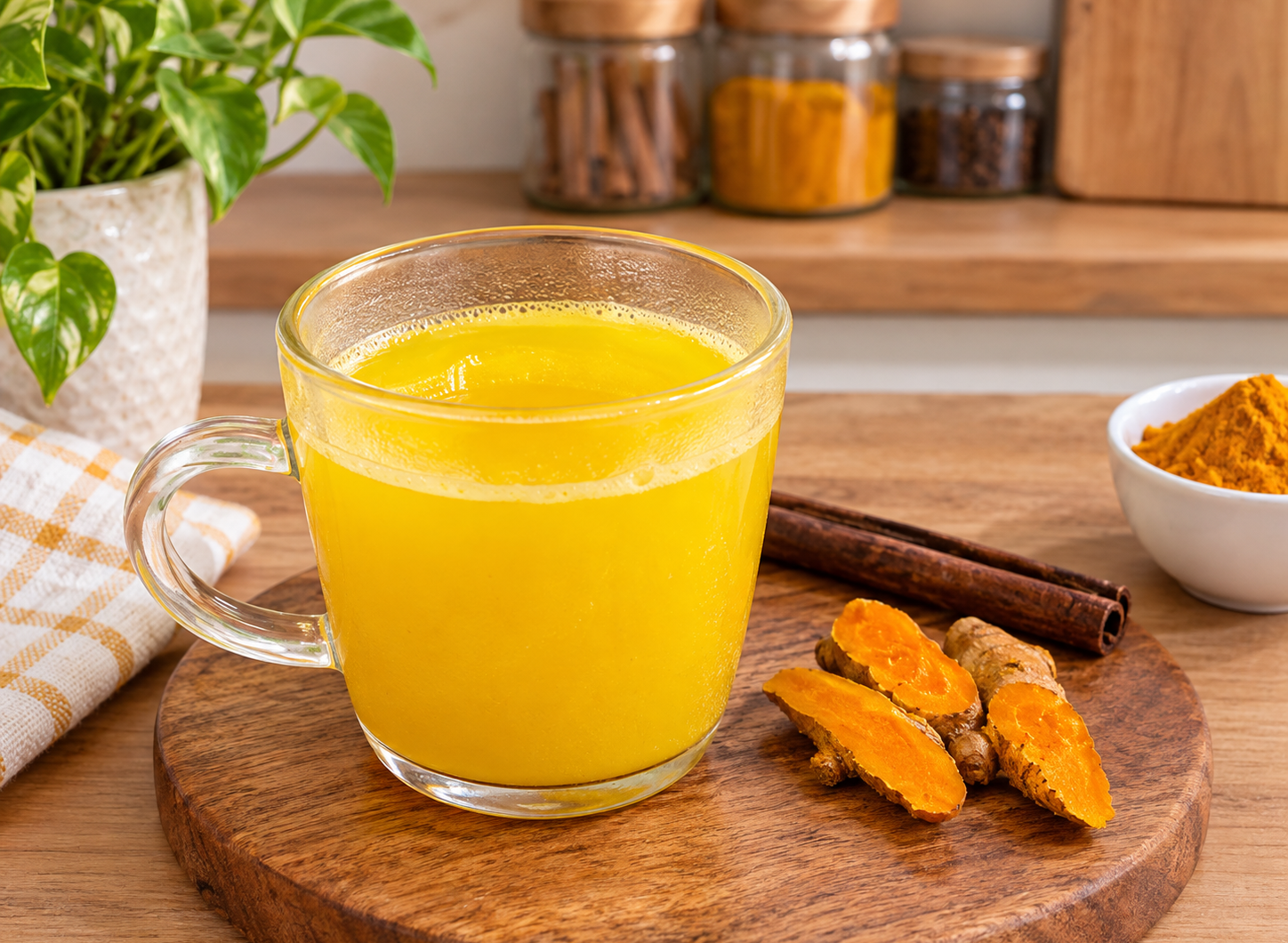
Turmeric, Ginger, Cinnamon, Lemon & Honey Tea
A simple homemade turmeric tea made with fresh turmeric, ginger, cinnamon, lemon, honey, and water. This naturally golden drink is caffeine-free and can be served warm or chilled.
4
servings3
minutes10
minutes34
kcal13
minutesIngredients
10 slices turmeric, peeled and sliced; turmeric powder may be used as a substitute
6–10 slices ginger, peeled and sliced; dried ginger powder may be used as a substitute
1 stick cinnamon; cinnamon powder may be used as a substitute
1 lemon, squeezed; lime juice may be used as a substitute
6 cups water
Honey, to taste; maple syrup, white sugar, or brown sugar may be used as substitutes
Directions
- Add the turmeric slices, ginger slices, cinnamon, and water to a pot. Bring the mixture to a boil over medium-high heat. Reduce the heat and let the mixture simmer for 10 minutes. Taste it after cooking and simmer longer if you prefer a stronger flavor.
- Turn off the heat once the tea reaches your preferred color and strength. If grated ginger or powdered spices were used, strain the liquid through a fine-mesh strainer. Add the freshly squeezed lemon juice to the warm tea and stir well to combine.
- Let the drink cool slightly, then add honey according to taste. Stir until the sweetener has completely dissolved.
- Pour into four cups and serve warm. For iced tea, cool completely, refrigerate, and serve over ice.
Nutrition Facts
- Calories: 34kcal
- Fat: 1g
- Sodium: 38mg
- Potassium: 107mg
- Carbohydrates: 8g
- Fiber: 3g
- Sugar: 2g
- Protein: 1g
- Calcium: 54mg
- Iron: 1mg


