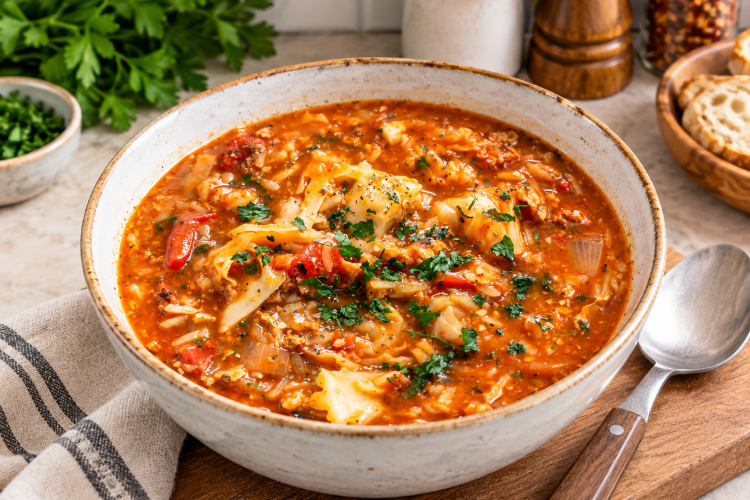
Hearty Cabbage Roll Soup brings the comforting flavors of traditional stuffed cabbage rolls into a much easier soup recipe. Instead of preparing individual cabbage leaves, filling them, rolling them, and baking them, everything cooks together in one pot. Lean ground beef, tender green cabbage, carrots, rice, tomato sauce, beef broth, garlic, onion, and parsley create a hearty meal with familiar cabbage roll flavor and far less preparation.
This easy cabbage roll soup is especially useful when you want a warm homemade dinner without spending hours in the kitchen. The beef provides a savory base, while cabbage and carrots soften in the tomato-rich broth. Uncooked long-grain rice goes directly into the pot and absorbs the surrounding flavors as it cooks. The result is a filling, comforting soup that works well for weeknight dinners, family meals, and make-ahead lunches.
Why You Like This Recipe
One of the biggest advantages of this healthy cabbage roll soup is convenience. Everything is prepared in a single Dutch oven or soup pot, which keeps both cooking and cleanup manageable. There is no need to boil whole cabbage leaves, prepare separate fillings, or carefully roll individual portions. You simply brown the beef, add the remaining ingredients in stages, and allow everything to simmer together.
The recipe is also practical for meal preparation because it stores well in the refrigerator and can be frozen for longer storage. With vegetables, beef, and rice all included, you do not need to prepare several separate dishes to create a satisfying meal. The original recipe highlights its one-pot preparation, budget-friendly ingredients, freezer-friendly nature, and suitability for family meals.
Classic Cabbage Roll Flavor Without the Rolling
Traditional cabbage rolls are delicious, but their preparation can be time-consuming. The cabbage usually needs to be softened before individual leaves are separated, filled, folded, and arranged for cooking. This unstuffed cabbage roll soup removes those extra steps while keeping the main flavor combination of cabbage, ground beef, rice, tomato, and seasonings.
As the soup simmers, the chopped cabbage becomes tender and mixes naturally with the beef and rice. Instead of cutting through a stuffed cabbage roll to get a little of every ingredient, each spoonful contains a mixture of meat, vegetables, rice, and tomato broth. It is an efficient way to enjoy cabbage roll-inspired comfort food in soup form.
Lean Ground Beef Creates a Hearty Base
The recipe uses one pound of lean ground beef, with 90% lean beef recommended. Lean beef provides the rich, savory flavor associated with traditional cabbage rolls while reducing the amount of excess grease that needs to be removed after browning. The meat is cooked first so it can develop flavor before the vegetables, broth, and tomato sauce are introduced.
Break the ground beef into small crumbles as it cooks. Smaller pieces distribute more evenly throughout the finished soup, making it easier to get beef in every serving. Season the meat lightly with salt and freshly ground black pepper while browning, remembering that beef broth can also contribute sodium later in the recipe.
Why Browning the Beef First Matters
Heat two teaspoons of olive oil in a large Dutch oven or soup pot over medium-high heat. Once hot, add the lean ground beef and cook it for approximately five minutes. Break the meat apart with a wooden spoon as it cooks and continue until there is no visible pink remaining. Drain excess grease if necessary.
Browning the meat before adding liquid develops a deeper savory flavor than simply simmering raw beef in the broth. The browned meat and flavorful residue in the pot create the first layer of the soup. Because the remaining ingredients are added to the same pot, those flavors remain in the finished dish rather than being lost.
Onion and Garlic Build More Flavor
After the beef has browned, one finely chopped medium onion is added directly to the pot. Cook the onion for about three minutes, stirring occasionally, so it begins to soften. Then add two teaspoons of freshly minced garlic and cook for approximately another 30 seconds, just until it becomes fragrant.
Garlic cooks much faster than onion, which is why it is added later. Cooking minced garlic for too long over relatively high heat can cause it to burn and become bitter. A short cooking period releases its aroma while preserving the savory flavor that complements the beef, cabbage, and tomato broth.
Fresh Green Cabbage Is the Main Vegetable
Four cups of chopped green cabbage give this soup its defining character. Cabbage may initially look bulky when added to the pot, but its volume decreases considerably as it cooks. The leaves soften and absorb the flavors of the beef broth, tomato sauce, garlic, onion, and other ingredients.
Chop the cabbage into reasonably uniform pieces rather than leaving some pieces very large and others extremely small. Evenly sized cabbage cooks more consistently and creates a better spoonable texture. The goal is tender cabbage that still has enough structure to remain noticeable in the finished soup rather than completely disappearing into the broth.
Carrots Add Color and Natural Sweetness
Two medium carrots are peeled and thinly sliced before being added alongside the cabbage. Carrots contribute natural sweetness, helping balance the savory beef and acidic tomato components. Their bright orange color also makes the soup more visually appealing against the green cabbage and deep red tomato broth.
Thin slices work best because the carrots need to become tender during the same 25–30 minute simmer used to cook the rice and cabbage. Very thick pieces may remain firmer than the other ingredients. Keeping the slices relatively uniform ensures that each spoonful has a pleasant and consistent texture.
Creating the Rich Tomato Broth
Four cups of beef broth and three 8-ounce cans of tomato sauce form the liquid base of this cabbage roll soup. Beef broth provides savory depth, while tomato sauce creates the characteristic rich red color and tomato flavor commonly associated with stuffed cabbage dishes.
After adding the cabbage and carrots, pour the beef broth and tomato sauce into the pot and stir thoroughly. The liquid should surround the vegetables and browned beef so everything can cook evenly. As the soup simmers, the flavors become more integrated and the rice absorbs some of the liquid, giving the broth a slightly thicker consistency.
Why Brown Sugar Is Added
The recipe includes three tablespoons of brown sugar. Its purpose is to balance the natural acidity of the tomato sauce and provide the subtle sweet-savory character often found in cabbage roll recipes. The brown sugar is not intended to turn the soup into a noticeably sweet dish.
Add the specified amount along with the rice and bay leaf and stir until evenly distributed. Since the instruction is to preserve the original ingredients, the three tablespoons remain unchanged in this version. The sweetness should work alongside the tomato, beef, cabbage, and aromatics rather than dominating them.
Long-Grain Rice Makes the Soup More Filling
Half a cup of uncooked long-grain rice goes directly into the soup. There is no need to prepare it separately. As the rice simmers, it absorbs the flavorful broth and becomes tender while also releasing some starch into the liquid. This helps create a hearty consistency without requiring additional thickeners.
Because the rice cooks directly in the soup, occasional stirring is important. Rice can settle on the bottom of the pot and stick, especially as the broth thickens. Stir gently several times during the simmering period, making sure to reach the bottom without breaking down the vegetables unnecessarily.
Adding the Bay Leaf
One bay leaf is included to provide subtle aromatic depth while the soup simmers. Bay leaf works particularly well in slow-simmered tomato and meat dishes because its flavor develops gradually rather than immediately. Add it when the rice and brown sugar go into the pot.
The bay leaf should always be removed before serving. It is used to flavor the broth during cooking but is not intended to be eaten. Once the rice, cabbage, and carrots are tender, locate the leaf and discard it before completing the final seasoning.
How to Simmer Cabbage Roll Soup
Once all the primary ingredients are combined, bring the soup to a gentle boil. Reduce the heat to low and partially cover the pot. Simmer for approximately 25–30 minutes, stirring occasionally to prevent the rice from settling and sticking to the bottom.
During this period, several things happen at once. The cabbage becomes tender, the carrot slices soften, and the uncooked rice absorbs the flavorful liquid until fully cooked. Meanwhile, the tomato sauce, broth, beef, onion, garlic, bay leaf, and brown sugar combine into a more unified flavor. The broth also becomes slightly thicker as the rice cooks.
How to Know When the Soup Is Ready
The rice is the easiest ingredient to use when judging doneness. Taste a few grains near the end of the 25–30 minute cooking period. They should be tender without becoming excessively soft. The cabbage should also be tender, and the carrots should be easy to bite while still maintaining their shape.
Avoid continuing to simmer the soup much longer after the rice has cooked. Overcooked rice can become overly soft and may continue absorbing broth, making the soup much thicker than intended. If the rice is tender and the vegetables are properly cooked, the soup is ready for its final seasoning.
Finishing the Soup Before Serving
Once everything is tender, remove and discard the bay leaf. Taste the broth and determine whether additional salt or freshly ground black pepper is needed. Because different beef broth brands contain different sodium levels, tasting before adding extra salt is particularly important.
The original instructions also mention adding a little more brown sugar if the tomato flavor seems particularly acidic. However, the recipe card below preserves the original ingredient quantity rather than encouraging unnecessary changes. Once seasoned, gently stir the soup and prepare it for serving.
Fresh Parsley Adds a Simple Finish
Two tablespoons of freshly chopped parsley are included in the recipe. Parsley is best added near serving time because its fresh flavor and green color provide contrast to the deeply colored tomato broth. Sprinkle it over the soup before ladling portions into bowls.
Fresh parsley also makes the finished dish look more appealing without introducing another strong flavor. Since the soup already contains beef, cabbage, tomato, onion, garlic, rice, and bay leaf, a mild herb works well as the final touch rather than competing with the established cabbage roll flavor.
Freezing Cabbage Roll Soup
The recipe describes this soup as freezer-friendly and recommends freezing it for up to three months. Cool the soup completely before transferring it to freezer-safe containers or bags. Leave appropriate room for expansion rather than filling containers completely to the top.
For reheating, thaw the frozen soup overnight in the refrigerator. This gradual thawing makes it easier to warm evenly. Because the rice may absorb additional liquid during freezing and thawing, check the consistency and add a little broth or water when necessary.
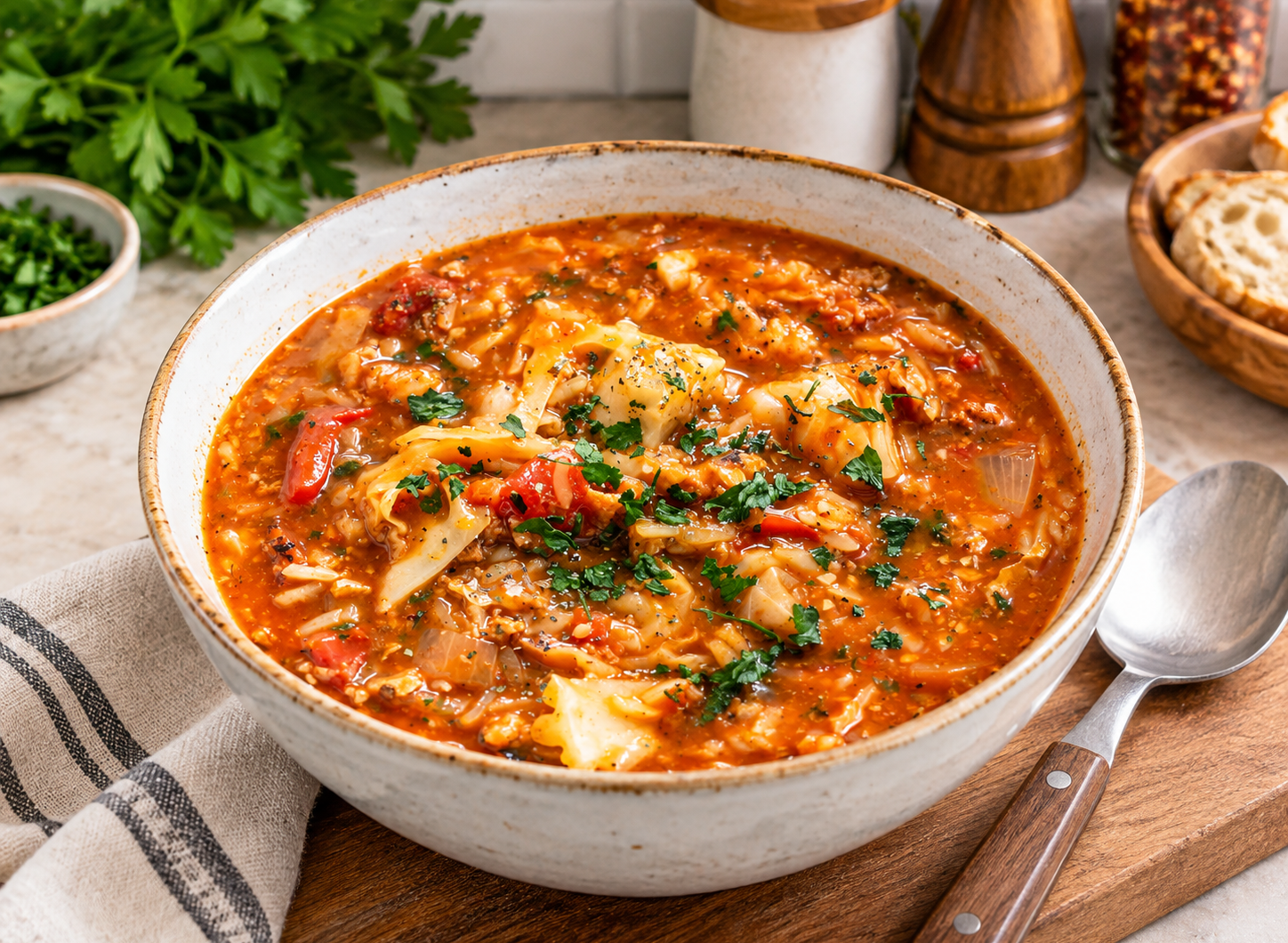
Hearty Homemade Cabbage Soup
A hearty one-pot cabbage roll soup made with lean ground beef, tender cabbage, carrots, rice, tomato sauce, and savory beef broth. It delivers classic stuffed cabbage flavor with much easier preparation.
6
servings15
minutes40
minutes55
minutesIngredients
2 teaspoons olive oil
1 pound lean ground beef, preferably 90% lean
Salt and freshly ground black pepper, to taste
1 medium onion, finely chopped
2 teaspoons fresh garlic, minced
4 cups green cabbage, chopped
2 medium carrots, peeled and thinly sliced
4 cups beef broth
3 cans (8 ounces each) tomato sauce
½ cup uncooked long-grain rice
1 bay leaf
3 tablespoons brown sugar
2 tablespoons fresh parsley, chopped
Directions
- Heat olive oil over medium-high heat. Add beef, season lightly, and cook for about 5 minutes until browned.
- Add onion and cook for 3 minutes. Stir in garlic and cook for 30 seconds. Stir in chopped cabbage and sliced carrots.
- Pour in beef broth and tomato sauce. Stir well. Stir in uncooked rice, bay leaf, and brown sugar.
- Bring to a gentle boil. Reduce heat, partially cover, and simmer for 25–30 minutes. Stir occasionally. Remove the bay leaf. Taste and adjust salt and black pepper.
- Stir in or garnish with fresh parsley and serve hot.
Notes
- How to Reheat Cabbage Roll Soup
For stovetop reheating, place the required amount in a saucepan or soup pot and warm it over medium-low heat. Stir occasionally so the bottom does not catch. If the soup has become too thick during storage, add a splash of beef broth or water until it reaches your preferred consistency. - How to Store Leftover Cabbage Roll Soup
Allow the soup to cool before transferring it into airtight storage containers. Refrigerate leftovers for up to four days. Using smaller containers can make individual lunch or dinner portions easier to reheat while keeping the remainder refrigerated.


